
Are Open Safari Vehicles Safe? 11 Honest Facts for First-Time Travellers

How Much Uganda Safari Cash Should You Carry? 11 Practical Answers
September 3, 2026
What Is Included in a Uganda Safari Package? 11 Important Details Before You Book
September 4, 2026
Open safari vehicles can look frightening to someone planning their first African holiday. Photographs often show travellers sitting only a short distance from lions, elephants, buffaloes and leopards. The vehicle may have an open roof, large windows or completely open sides. Therefore, first-time visitors naturally wonder what prevents a wild animal from approaching or attacking the passengers.
The honest answer is that professionally operated safari vehicles provide a well-established method of wildlife viewing, but no genuine wilderness activity is completely free from risk. Safety depends on the vehicle, the destination, the guide, the animal’s behaviour and the passengers’ actions. Travellers must remain calm, follow instructions and respect every animal’s space. Wagatil Safaris uses suitable safari vehicles and experienced driver-guides to manage these factors throughout each game drive.
1. What Are Open Safari Vehicles?
The expression “open safari vehicle” covers several designs. A fully open-sided vehicle may have raised seats and little bodywork around passengers. These vehicles appear frequently in photographs from private reserves in Southern Africa. However, they are not the only vehicles used across the continent.
Uganda commonly uses enclosed 4×4 safari vehicles with large windows and a roof that opens during wildlife viewing. Passengers sit inside the main body of the vehicle and stand beneath the raised roof when the guide says conditions are suitable. The roof normally closes during highway transfers, heavy rain or other situations that require greater protection.
The distinction matters because an international traveller may imagine spending an entire journey inside a completely open jeep. In reality, a private Uganda wildlife safari often includes long transfers on public roads. An enclosed vehicle with a pop-up roof offers practical protection during transfers while still creating excellent views inside national parks.

Uganda commonly uses enclosed 4×4 vehicles with roofs that open during wildlife viewing
2. Why Are Open Safari Vehicles Safe When Used Correctly?
Open safari vehicles support safe wildlife viewing when trained guides operate them responsibly and passengers obey instructions. The vehicle creates a clear physical structure around the group. Its height, shape, movement and engine sounds also make it a familiar feature in parks that receive regular tourism traffic.
However, describing the vehicle as safe does not mean an animal has become tame. Lions, elephants, buffaloes and leopards remain wild. They can change direction, defend themselves or react to pressure. A professional guide watches the entire situation and avoids assuming that yesterday’s animal behaviour will repeat itself today.
Safety also depends on distance and positioning. A guide avoids trapping an animal, separating a mother from her young or blocking an escape route. The guide may keep the engine running, reverse slowly or leave the sighting when an animal shows discomfort. Wagatil Safaris combines suitable equipment with active decision-making rather than treating the vehicle itself as a complete guarantee.
3. How Do Wild Animals React to Safari Vehicles?
Animals do not all interpret vehicles in the same way. In places where vehicles move predictably along established tracks, some animals become accustomed to their presence. This process does not make the animals friendly or domesticated. It simply means they may continue feeding, resting or walking when a vehicle remains calm and non-threatening.
People sometimes say that a lion sees the vehicle and its passengers as one large object. That explanation can help travellers understand why passengers should not separate their outline from the vehicle. Nevertheless, we cannot know that every animal processes the scene in exactly the same way. Species, individuals and circumstances differ.
A person who stands suddenly, leans out, waves an arm or steps onto the ground may create a new movement outside the vehicle’s familiar shape. This can attract attention or cause alarm. Consequently, guides ask passengers to remain seated or move slowly. Predictable behaviour protects the animals as well as the visitors.
4. Open Safari Vehicles Require Strict Passenger Rules
Passengers have an active role in game-drive safety. The first rule is to listen to the driver-guide immediately. A guide may ask everyone to sit, lower their voices, close the roof or stop moving. These instructions respond to conditions that travellers may not yet recognise.
Keep arms, heads, cameras and phones within the protected viewing area. Never sit on the door, climb onto the roof or step out without permission. Moreover, do not call animals, imitate their sounds or use food to attract them. Feeding wildlife can create dangerous associations between people, vehicles and food.
Remain calm when an animal approaches. Do not scream, run, clap or make sudden movements. Parents should supervise children closely, while every traveller should secure loose equipment. A falling camera, swinging bag or excited movement may disturb an otherwise peaceful sighting.
Official rules vary between countries, parks and vehicle types. For example, SANParks’ published regulations require visitors in many South African national parks to remain inside vehicles except at designated places. Uganda’s regulations and ranger instructions apply within Ugandan protected areas. Therefore, travellers should follow the local guide rather than copying behaviour seen in an online video.
5. Are Open Safari Vehicles Safe Near Lions?

Passengers should remain calm and follow their guide whenever lions approach a safari vehicle.
Lions frequently rest for many hours, especially during warmer parts of the day. A pride may appear relaxed beside a track while vehicles observe quietly. Nevertheless, a resting lion remains a powerful predator. Guides monitor its posture, attention, movement and relationship with other animals.
Passengers should remain quiet and avoid changing position suddenly. They should never reach towards a lion, encourage it to approach or try to capture an unsafe close-up photograph. A responsible guide maintains space and leaves when the situation becomes unsuitable.
Young lions may show curiosity, while adults may use a road as a comfortable walking route. A lion can also approach a stationary vehicle without showing aggression. The guide decides whether to wait, reposition or withdraw. Travellers can read Wagatil Safaris’ detailed article about what happens when a lion approaches a safari vehicle for species-specific guidance.
No tour operator should promise that lions will never react unpredictably. Instead, professional safari operations reduce risk through distance, observation, vehicle positioning and disciplined passenger behaviour.
6. Are Open Safari Vehicles Safe Around Elephants?
Elephants require particular patience because they are large, intelligent and socially complex animals. A herd may include calves, protective females and individuals with different temperaments. Bulls can also behave differently according to their age, condition and reproductive state.
An elephant standing in the road does not automatically intend to charge. It may be feeding, crossing, resting or allowing other herd members to pass. The guide studies its ears, trunk, head position, movement and attention. No single sign should be interpreted without considering the entire situation.
Passengers should remain quiet and avoid blocking the elephant’s path. The driver may reverse, wait or switch off the engine according to the circumstances. An apparent delay is often the safest decision. Wagatil Safaris explains this process further in What Happens When Elephants Block a Safari Road?.
Never pressure a guide to move closer for a photograph. A respectful sighting provides enough distance for the elephants to choose their direction freely. That distance can also produce better photographs because the frame includes the herd and its natural environment.
7. Why Must You Remain Inside the Vehicle?
The vehicle provides a controlled platform from which the guide can manage the group. Once someone steps outside, the situation changes. The person becomes more exposed, moves independently and may be harder for the guide to protect.
Leaving the vehicle can also disturb wildlife. An animal that tolerated a stationary vehicle may respond differently to a person walking nearby. In addition, grass and vegetation can hide holes, thorns, insects, snakes or animals that passengers cannot see from their seats.
Only leave at a lodge, picnic site, viewpoint, designated area or another location approved by the guide or park authority. Some Ugandan parks offer authorised walking safaris. However, a walking safari is a separate guided activity with its own route, briefing and safety procedures. It is not permission to step out during an ordinary game drive.
Travellers deciding between the two experiences can read game drives versus walking safaris. Each activity can be rewarding, but the safety arrangements differ substantially.
8. Open-Sided Vehicles and Pop-Up Roof Vehicles Are Different
Fully open-sided vehicles offer wide views and strong connections with the surrounding landscape. They are commonly associated with particular private reserves and specialised game-viewing operations. Their suitability depends on the operating environment, regulations, guide training and vehicle design.
Uganda’s pop-up-roof vehicles retain doors, windows and a substantial body around passengers. During a game drive, the raised roof creates a sheltered standing space. Guests can photograph animals across the landscape without leaning through a door or climbing outside.
The roof can close during rain, dusty transfers or highway travel. This versatility suits Uganda because itineraries often connect several parks, towns and forest regions. A safari may include paved highways, rough park tracks, mountainous roads and long transfers within one journey.
Wagatil Safaris’ guide to choosing the right safari vehicle explains how four-wheel-drive capability, seating, windows, suspension and roof design influence comfort. Travellers can also learn more about pop-up roof cars in Uganda.
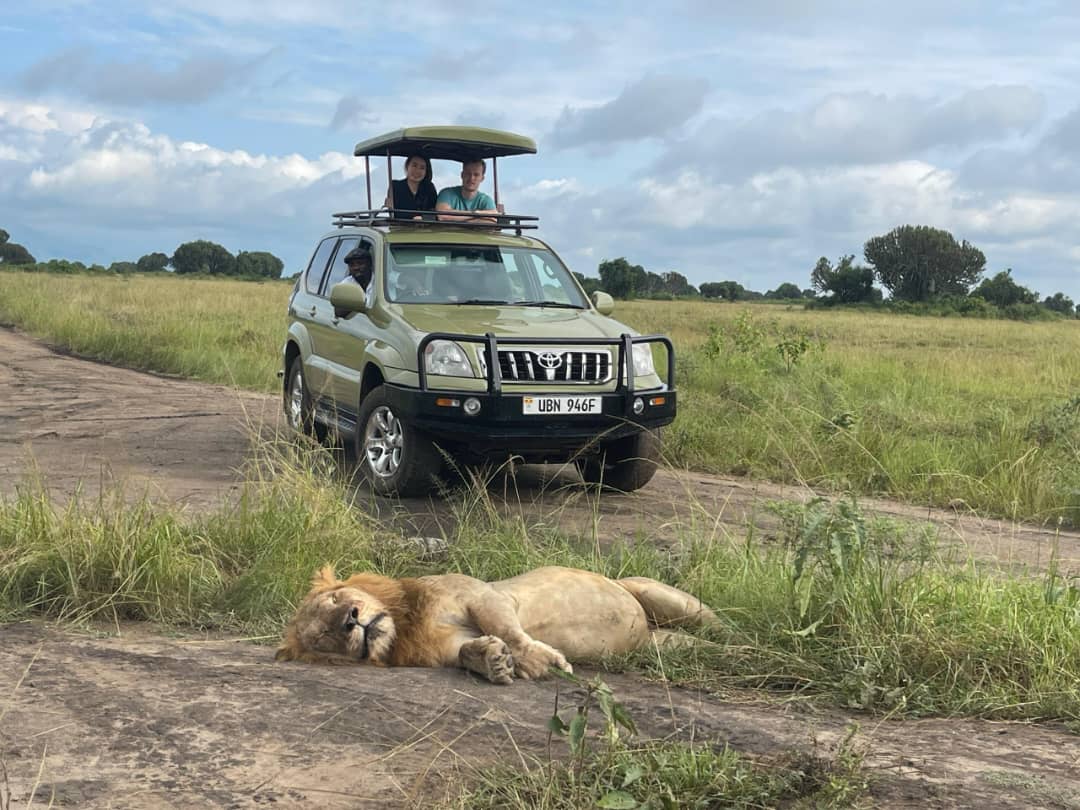
Uganda commonly uses enclosed 4×4 vehicles with roofs that open during wildlife viewing.
9. Are Open Safari Vehicles Safe for Children?
Children need closer supervision because excitement can lead to sudden movement, loud voices or attempts to lean towards an animal. Parents should confirm minimum-age policies with the tour operator and lodge before booking because requirements can differ between activities and destinations.
A child should be able to remain seated, follow instructions and stay quiet when required. Young passengers should not sit on doors, stand on seats without support or hold equipment through an opening. Parents must supervise them instead of relying entirely on the driver-guide.
The itinerary also matters. A long game drive may become uncomfortable for a very young child. Heat, dust, early starts and limited toilet opportunities can affect concentration. Shorter drives and private arrangements may allow more flexibility, although stops remain subject to safety and park rules.
Wagatil Safaris can design Uganda family tours around the children’s ages, attention spans and interests. Families should communicate medical, mobility and behavioural needs before confirmation. Honest information allows the company to recommend a suitable vehicle and realistic schedule.
10. What Happens When an Animal Approaches the Vehicle?
An approaching animal does not always represent an emergency. It may be crossing the track, following another animal, investigating a smell or using the shade beside the vehicle. The guide watches carefully and decides whether movement would increase or reduce risk.
Passengers should stop unnecessary movement and listen for instructions. The guide may ask everyone to sit down, remain silent or close the roof. Never make a sudden attempt to move away on your own. In addition, do not touch the animal, offer food or extend a camera towards it.
The driver should preserve an exit route whenever conditions allow. However, rapidly starting the vehicle or accelerating can sometimes create more disturbance than waiting. The correct action depends on the species, distance, terrain and behaviour.
A calm encounter can become one of the safari’s most memorable moments. Nevertheless, safety always takes priority over photographs. If the guide ends the sighting, passengers should not argue or ask for one more close approach.
11. What Happens If the Safari Vehicle Breaks Down?
A breakdown is inconvenient, but professional preparation can prevent it from becoming chaotic. Safari vehicles should receive regular inspection and maintenance. Guides should also carry communication equipment, basic recovery tools and essential supplies suited to the route.
If the vehicle develops a problem inside a wildlife area, remain inside unless the guide identifies a safer authorised alternative. Do not walk towards a lodge, climb onto the road or search through surrounding vegetation. The guide can contact another vehicle, park personnel or the company’s operations team.
The safest response depends on the location, visibility, weather and nearby wildlife. Passengers should remain calm while the guide assesses the problem. Wagatil Safaris’ safari vehicle breakdown guide explains these procedures in greater detail.
Suitable travel insurance remains important because policies may cover certain delays, interruptions or emergencies. However, coverage varies. Read the Wagatil Safaris guide to travel insurance for Uganda tourists and review the insurer’s actual terms before departure.
How Wagatil Safaris Makes Open Safari Vehicles Safer
Wagatil Safaris plans each route around the destination, road conditions, passenger numbers and luggage. Uganda’s protected areas can include open savannah, forest roads, wet tracks and long transfers. Therefore, the vehicle must support both wildlife viewing and practical travel.
Before a game drive, the driver-guide considers the vehicle’s condition, fuel, tyres, communication options and expected route. During the activity, the guide controls speed, distance and positioning. The guide also interprets animal behaviour and gives passengers clear instructions.
Wagatil Safaris never treats close proximity as the only measure of a successful sighting. Respectful distance can protect wildlife, reduce stress and create more natural behaviour. Moreover, a patient guide can use tracks, alarm calls, habitat and recent information to locate rewarding sightings without chasing animals.
Travellers should communicate mobility limitations, children’s ages, photography equipment and seating needs before arrival. A vehicle that suits one group may not suit another. Private arrangements can provide extra flexibility, but they remain subject to wildlife behaviour and park regulations.
Where Can You Experience Game Drives in Uganda?
Queen Elizabeth National Park
Queen Elizabeth National Park offers game drives through areas such as Kasenyi and Ishasha. Travellers may encounter elephants, buffaloes, Uganda kobs, lions and other wildlife. Ishasha is especially famous for tree-climbing lions, although sightings remain natural and cannot be guaranteed.
The official Uganda Wildlife Authority Queen Elizabeth page provides current destination information. A game drive can also combine with a Kazinga Channel boat safari, giving travellers different ways to observe wildlife.
Murchison Falls National Park
Murchison Falls National Park combines savannah game drives with Nile boat experiences and dramatic waterfall scenery. Giraffes, elephants, buffaloes, antelopes and predators occur within the wider conservation area.
The official Murchison Falls National Park page explains access and activities. Visitors should stay on approved routes and follow all current park instructions.
Lake Mburo National Park
Lake Mburo provides game drives, authorised walking experiences and boat safaris. Its wildlife includes zebras, impalas, buffaloes, warthogs and many bird species. Because different activities operate under different rules, travellers must attend each briefing carefully.
The Uganda Wildlife Authority Lake Mburo page provides official destination information. A traveller should never assume that permission to walk in one authorised area applies throughout the park.
Kidepo Valley National Park
Kidepo offers a remote savannah experience in northeastern Uganda. Its distance from Kampala makes vehicle reliability, fuel planning and realistic travel times particularly important. Wagatil Safaris can build overnight stops or alternative transport into a suitable itinerary.
Common Mistakes First-Time Travellers Should Avoid
Standing suddenly when an animal moves creates unnecessary risk. Passengers may react instinctively because they want a photograph or feel frightened. However, remaining calm gives the guide control of the situation.
Another mistake involves leaning beyond the roof or window. A traveller may concentrate so strongly on a camera screen that they forget their physical position. Camera straps and loose equipment should remain secure.
Guests should never demand that the guide leave an authorised track, surround an animal or approach a mother with young. Wildlife welfare and park regulations matter more than social-media content.
Finally, travellers should not assume that every vehicle shown online operates under the same rules. Vehicle designs, protected-area regulations and guiding systems differ across Africa. Follow the instructions provided for the actual destination and activity.
Frequently Asked Questions About Open Safari Vehicles
Are open safari vehicles completely safe?
No responsible operator can describe a wildlife activity as completely risk-free. However, suitable vehicles, professional guides, park regulations and disciplined passenger behaviour reduce risk significantly.
Why do lions usually ignore safari vehicles?
Lions in frequently visited areas may become accustomed to vehicles moving predictably along established tracks. They often continue resting or feeding when the vehicle keeps a respectful distance. This does not make them tame or harmless.
Can a lion jump into an open safari vehicle?
A lion is physically capable of powerful movement. Nevertheless, responsible guiding aims to prevent situations that encourage dangerous proximity. Passengers must stay calm, remain inside and follow every instruction.
Can elephants overturn safari vehicles?
Elephants possess the physical strength to damage a vehicle. That is why guides avoid provoking, crowding or blocking them. Distance, observation and an available exit route remain essential.
Can passengers stand through a pop-up roof?
Passengers may stand within the designated roof opening when the driver-guide says it is safe. They should sit immediately when instructed and should never climb onto the roof or extend their bodies outside the protected space.
Are Uganda safari vehicles fully open?
Many vehicles used on Ugandan private safaris have enclosed sides, large windows and pop-up roofs. Completely open-sided vehicles are more common in some other African safari settings.
Can I leave the vehicle to take photographs?
Only leave at an authorised location or when a qualified guide clearly permits it. Never step out beside wildlife or assume that a quiet area contains no animals.
What should I do if I feel frightened?
Tell the guide calmly and immediately. Sit down, breathe slowly and avoid sudden movement. The guide can explain the animal’s behaviour or reposition the vehicle when appropriate.
Are night game drives safe?
Authorised night drives use approved routes, equipment and guides under applicable park rules. Travellers should remain inside and follow the briefing. Read more about a night game drive in Uganda.
A private vehicle can offer greater control over seating, pace and communication. However, safety still depends on the vehicle, guide, park rules, animal behaviour and passengers.
Which vehicle will Wagatil Safaris use?
The company selects a vehicle according to the route, group size and itinerary. Ask for written details when requesting a quotation, especially if you have mobility needs, children or substantial photography equipment.
Final Answer: Are Open Safari Vehicles Safe?
Open safari vehicles are generally a safe and established way to observe African wildlife when professional guides operate them under the correct conditions. However, safety does not come from the vehicle alone. It depends on respectful distance, experienced judgement, park regulations and passengers following instructions.
Uganda often uses enclosed 4×4 vehicles with pop-up roofs. This design supports long road transfers while providing excellent wildlife views inside national parks. Travellers remain within the vehicle’s main structure and only stand through the opening when the guide permits it.
Wild animals remain unpredictable, so Wagatil Safaris never encourages careless proximity. Instead, the company plans appropriate vehicles, uses experienced driver-guides and prioritises responsible wildlife viewing. Contact Wagatil Safaris to discuss your itinerary, vehicle preferences and any safety concerns before booking.


