
Chimpanzee Trekking and Canopy Walk in Nyungwe: 7 Amazing Planning Tips for One Day

Are There Chimpanzees in Burundi? A Surprising Guide to Kibira National Park
September 28, 2026
Uganda Gorilla Trekking from Australia: Complete 2027 Travel Guide
October 1, 2026

chimpanzee trekking and canopy walk in Nyungwe
Nyungwe Forest National Park is one of Rwanda’s most rewarding destinations for travellers interested in primates, forest scenery and guided outdoor experiences. Many visitors come primarily for chimpanzees. Once they discover the canopy walkway, they naturally ask whether they need another day or can enjoy both activities together.
The answer is yes, you can often do both on the same day. The usual arrangement places chimpanzee trekking early in the morning and the canopy walk later in the afternoon. Wagatil Safaris uses this sequence in its 6 Days Rwanda Primates Trekking Safari.
However, the schedule should be built around your actual reservations. Chimpanzees move through a wild forest, so the trek does not always finish at the same time. Nyungwe is also large, and the morning tracking location may not be beside the reception point used for the afternoon canopy walk.
A good safari plan considers where you will sleep, when you need to leave your lodge, where each activity begins and how much time you have between them. This guide explains each of those decisions so you can choose a satisfying one-day visit or a more relaxed two-day stay.
Can You Do Chimpanzee Trekking and Canopy Walk in Nyungwe on the Same Day?
Yes. Chimpanzee tracking begins early, while a suitable canopy walk departure may be available later in the day. Visit Rwanda explains that tracking can last from one hour to several hours, depending on where the chimpanzees are found. This variable duration is the most important consideration when arranging the afternoon.
The order normally makes sense: chimpanzees first, canopy walk second. You spend the morning following guides through the forest and then, if the trek finishes in time, travel to the canopy walkway’s meeting point. An afternoon departure gives you a chance to eat, refresh and prepare for another guided walk.
A sample itinerary shows that the combination is feasible, but it does not confirm that the same departure times will be available for your date. Your guide should check both activity reservations and the transfer between them before presenting the day as confirmed.
The plan is particularly attractive for visitors who want to experience Nyungwe without spending several full days there. Yet it is also an active day. You will start early, spend time walking in the forest and undertake another walk to reach the suspended canopy section.
What Is Chimpanzee Trekking in Nyungwe Like?
Chimpanzee trekking is a guided search for wild chimpanzees in their natural forest habitat. You follow the park’s arrangements for your assigned tracking area, listen to the briefing and walk with authorised guides. The route and duration depend on the chimpanzees’ location and the conditions on the day.
Part of the excitement is that the experience is not scripted. You may hear calls echoing through the trees before spotting a chimpanzee. You may see individuals moving through branches or observe part of a group feeding and interacting. At other times, patience is required as the guides search.
A trek also reveals much more than chimpanzees. Vegetation, birds, changing light and the sounds of the rainforest make the walk itself memorable. African Parks’ Nyungwe overview describes the park’s rich wildlife and its importance as a protected forest landscape.
Chimpanzee sightings cannot be guaranteed. The animals are free to move through the forest, and a responsible itinerary should never promise that they will be in a particular place. Plan the day with genuine interest in Nyungwe’s forest, while recognising how special an encounter can be.

A chimpanzee sitting among the trees during a primate experience in Nyungwe Forest.
What Is the Nyungwe Canopy Walk Like?
The canopy walk offers a striking change in perspective. Instead of looking upward from a forest trail, you cross a suspended walkway and look out toward the treetops and surrounding landscape. The experience combines a guided forest walk with time above part of the rainforest.
According to Visit Rwanda’s canopy walkway guide, visitors approach the walkway on a walk from Uwinka Reception Centre. It is therefore an outing that takes time and energy, rather than a bridge you can visit immediately after parking your vehicle.
Along the approach, the forest itself is part of the experience. You can take in trees, plants, birds and the atmosphere of Nyungwe before reaching the elevated section. Once on the walkway, pause to appreciate the landscape while following your guide’s instructions.
The canopy walk should not be presented as a second chimpanzee viewing activity. Although Nyungwe contains many species, no wildlife sighting from the walkway can be promised. Choose this activity for the walk, the height, the views and the chance to see the forest differently.
Why Do Travellers Want to Combine Both Activities?
For many guests, Nyungwe forms one part of a broader Rwanda itinerary. They may also want gorilla trekking in Volcanoes National Park, a game drive in Akagera National Park or time beside Lake Kivu. Combining Nyungwe’s two signature experiences can help make room for these other destinations.
The activities also complement each other well. Chimpanzee tracking concentrates your attention on animals moving through a complex habitat. The canopy walk lets you step back and appreciate the forest’s scale. One experience is driven by the search for wildlife; the other invites a wider view.
A same-day arrangement can also simplify accommodation plans. If both activities fit on a confirmed schedule, you may not need another full activity day in the park. You should still consider staying nearby both before and after the activities so that your day does not become exhausting.
The key is to distinguish efficient from rushed. An efficient itinerary leaves enough time for transfers, meals and the possibility of a longer chimpanzee trek. A rushed itinerary assumes that every part of the morning will finish at the earliest possible time.
Planning Tip 1: Arrive Near Nyungwe the Day Before
Chimpanzee tracking starts early, so travel to the Nyungwe area before your activity day. This gives you time to check in, prepare your clothes and equipment, eat dinner and rest. Your driver-guide can then collect you at the time required for your confirmed briefing point.
Trying to leave Kigali by road on the same morning as an early chimpanzee trek is not a sensible basis for this plan. The journey adds a long transfer before the activity has even begun. If you also want an afternoon canopy walk, the pressure on the schedule becomes greater.
When choosing a lodge, look beyond a general description such as “near the park.” Nyungwe extends across a large area. Your accommodation needs to work for the chimpanzee reporting point assigned to you, as well as the afternoon journey toward Uwinka.
Wagatil’s gorilla and chimpanzee trekking comparison discusses why the position of Nyungwe accommodation matters. A lodge may be appealing and comfortable but still require an inconvenient early transfer for your specific tracking booking.
Ask two questions before confirming the property: How long is the drive from the lodge to my chimpanzee briefing point? How long is the onward drive to the canopy walk meeting point? These answers are more useful than a broad statement that the lodge is in the Nyungwe area.
Planning Tip 2: Check Your Assigned Chimpanzee Tracking Area
Chimpanzee activities in the Nyungwe area can be associated with different sections of forest. Your reporting point and meeting instructions should be confirmed for the date you are travelling. Do not assume that every chimpanzee trek starts close to the canopy walkway.
The main Nyungwe forest and the Cyamudongo area may involve different arrangements. Which one is relevant to you depends on your booking. The location affects how early you need to leave your lodge and how much driving may follow the morning activity.
This detail is easy to overlook when reading a short safari itinerary. The words “chimpanzee trekking and canopy walk” describe the experiences, but they do not explain the geography between them. A well-prepared plan should name the applicable reporting points once those are confirmed.
Ask your planner to work through the day using your real booking locations. They can then decide whether an afternoon canopy departure is sensible and whether there is time for a comfortable meal between the activities.
If you are deciding whether to track chimpanzees in Rwanda or Uganda, Wagatil’s Kibale Forest versus Nyungwe comparison can help with the wider choice. For a same-day Nyungwe plan, however, the assigned local reporting point is the essential detail.
Planning Tip 3: Reserve the Morning and Afternoon Separately
Your chimpanzee trek and canopy walk are distinct activities. Each needs its own confirmed arrangements, and a suitable afternoon departure must be available after the morning booking. Do not finalise the rest of the trip on the assumption that an afternoon walk can always be added later.
When requesting a quotation, ask your safari planner to state what is included. The proposal should clearly identify chimpanzee tracking, the canopy walk, park-related charges where applicable, guide services and transport between the activity locations.
If either activity is missing from the quotation, request clarification before making payment. A phrase such as “visit Nyungwe National Park” does not by itself show that both experiences have been reserved. Clear inclusions help you understand what the safari company is organising.
For official planning information, consult Visit Rwanda’s booking page and the African Parks contact page for Nyungwe. Current availability and reporting instructions should always be checked for your specific travel date.
Your itinerary should also show the intended order of activities. If the plan says “morning chimpanzee trekking and afternoon canopy walk,” your guide can prepare the transfers and make sure you know when to leave your accommodation.
Planning Tip 4: Leave a Generous Gap After Chimpanzee Trekking
The chimpanzees determine much of the morning’s pace. Visit Rwanda notes that tracking can take from one hour to several hours. A plan that depends on returning at one exact time may be difficult to deliver in a natural forest.
Even a successful sighting does not mean you immediately return to your lodge. The complete outing includes the briefing, getting to the trekking area, searching for chimpanzees, spending the permitted time observing them and walking back to the exit or meeting point.
Trail conditions matter too. Rain can make paths slippery, and a group may need to move carefully. Your guide cannot control where the chimpanzees travel or how quickly every guest walks. The itinerary needs enough space to absorb normal variation.
A sensible interval between activities also improves enjoyment. You may want to change damp clothes, have lunch, refill your water and travel without feeling anxious about missing the next departure. Those small pauses can make a long outdoor day feel much better.
If the afternoon canopy departure is too early to leave this gap, choose a different departure if available or move the canopy walk to another day. Protecting the quality of both experiences is more important than fitting two names into one itinerary.
Planning Tip 5: Allow Time for the Walk to the Walkway
Reaching the canopy walk’s reception point is only one stage of the afternoon. Visit Rwanda describes an approximately hour-long approach to the canopy walkway from Uwinka Reception Centre. Factor that guided forest walk into your energy and time planning.
Travellers sometimes imagine a brief bridge crossing immediately after stepping out of a vehicle. In reality, the approach through the forest is part of the activity. It gives you another chance to notice Nyungwe’s plants and birdlife before you reach the suspended section.
This can be delightful after a chimpanzee trek, especially if you enjoy walking. It can also feel demanding if your morning required considerable effort. Think about how comfortable you are with an early start and two outdoor activities before choosing a same-day schedule.
Height is another personal consideration. If someone in your group dislikes suspended walkways, explain that before booking. A guide can describe the activity, helping your party decide whether the experience sounds exciting or whether another forest walk would be more enjoyable.
Wear comfortable walking shoes with grip and carry a light rain layer. Keep your bag manageable, secure your phone or camera and follow the guide’s instructions. Good preparation makes it easier to appreciate the views instead of concentrating on wet shoes or misplaced equipment.
Planning Tip 6: Decide How Much Time Nyungwe Deserves
One active day may be enough if you mainly want chimpanzees and the canopy walk as part of a longer Rwanda safari. In that case, arrive beforehand, complete the two booked activities and continue your journey after a suitable night’s rest.
If forests and primates are central to your holiday, consider spending more time in Nyungwe. Extra days give you room for birdwatching, additional guided walks, scenery and a slower pace. You can enjoy the canopy walk without wondering whether the morning trek will finish in time.
Nyungwe’s biodiversity is another reason to stay. African Parks describes a protected landscape supporting chimpanzees and other primates, birds and extensive plant life. You may discover that the forest deserves attention beyond its two most familiar activities.
Photography enthusiasts often benefit from more time. Chimpanzees can move quickly and forest light can change constantly. The canopy walk offers a different type of landscape photograph. Separating the experiences gives you a chance to concentrate on each one without watching the clock.
There is no perfect number of nights for every guest. Consider your interests, budget, available travel days and onward route. Wagatil’s Nyungwe Forest National Park guide offers ideas for deciding what else you might want to include.
Planning Tip 7: Give Yourself an Easy Evening
A same-day trek and canopy walk often begin with a pre-dawn wake-up and finish after two guided forest outings. Plan a comfortable evening rather than automatically adding another long transfer. Dinner and rest can be an important part of enjoying the safari.
A second night near Nyungwe allows you to leave the following morning. This is especially helpful if you are continuing toward Kigali, Lake Kivu or Volcanoes National Park. You begin that journey after sleeping, instead of driving for hours when you are already tired.
If you need to travel onward the same evening, ask your planner to show the complete schedule. Include the expected end of the canopy activity and the drive to your next accommodation. A transfer that seems reasonable on a map may feel different after an active forest day.
Do not use a tightly timed flight as the endpoint of a day built around variable wildlife activity. Trek durations and road conditions can change. If a flight is involved, make sure your transport and activity schedule has been checked carefully.
Wagatil’s Rwanda wildlife safaris information can help you consider how Nyungwe connects with other destinations. Your goal should be a route that feels enjoyable throughout, including the hours between activities.
What Could Make the Same-Day Combination Difficult?
An unexpectedly long chimpanzee trek is the clearest challenge. The activity may take several hours, leaving less time for lunch and the transfer to the canopy walk. This does not mean something has gone wrong; it reflects the nature of tracking wild animals.
A long drive between reporting points is another concern. If your chimpanzee activity finishes in a different part of the Nyungwe area from the canopy walk meeting point, your afternoon needs to account for that road journey. The two activities should never be treated as if they begin at one location without confirmation.
Limited departure availability can also affect your plans. A canopy walk time that fits one day may not be available on another. Confirm the actual slot before committing to a same-day promise in an itinerary or choosing a lodge based on that promise.
Your energy level matters just as much as the timetable. Some travellers enjoy a full day of hiking and forest activities. Others would be happier with one activity, a leisurely meal and a second experience the next day. The right plan is the one that suits the guests travelling.
Your guide can help you review these points before you book. Give them your travel date, accommodation preference and onward destination so they can check whether the full schedule makes sense.
Is It Better to Do the Canopy Walk on a Different Day?
A separate day is an excellent choice when you have time to spare or want a more relaxed Nyungwe visit. You can give chimpanzee trekking your full attention without feeling that a later reservation depends on the time you return.
It also helps if your group has mixed walking abilities. A guest who finds the chimpanzee trek tiring can rest afterward and approach the canopy activity with fresh energy the next day. This may be more enjoyable than pressing on because the itinerary lists two activities.
A two-day arrangement offers more flexibility for meals, photography and other interests. You could combine the canopy walk with another suitable forest experience, subject to the activities available when you travel.
The disadvantage is that it uses more time and may involve another night’s accommodation. For travellers with a limited holiday, a carefully planned same-day schedule may be a better fit. Ask your planner to show both options and explain the difference in pace.
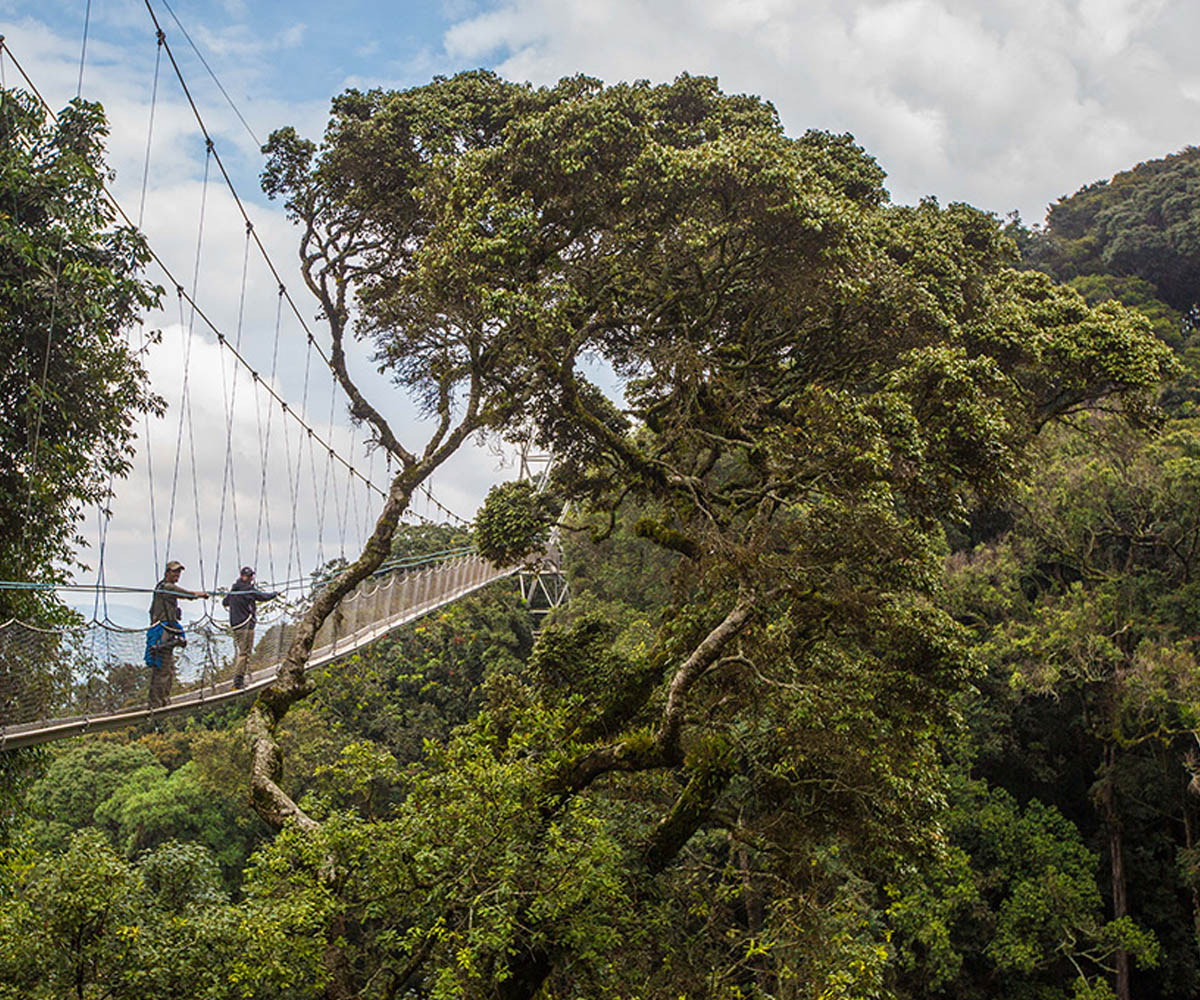
Visitors enjoying the canopy walkway above the rainforest in Nyungwe National Park.
Can You Travel From Kigali and Do Both Activities That Day?
A normal road-based itinerary should bring you to the Nyungwe area before your chimpanzee trekking morning. Tracking starts early, making it impractical to rely on leaving Kigali that same morning and reaching the briefing on time.
A short, workable itinerary can be arranged in three stages. Travel to Nyungwe and stay overnight. Complete the chimpanzee trek and canopy walk the next day if suitable departures are confirmed. Then continue to your next destination after resting.
If you only have a small number of days in Rwanda, think carefully about your main priority. Chimpanzee tracking alone requires an early start and travel planning. Adding the canopy walk is worthwhile when it fits, but an overloaded day can reduce the pleasure of both experiences.
You can explore Wagatil’s Rwanda travel guide for ideas about fitting Nyungwe into a longer journey. Use any sample schedule as a starting point and check current activity arrangements for your dates.
How Should You Pack for the Two Activities?
Prepare your bag the night before. With an early departure, it is easier to leave on time when your boots, rain layer, drinking water and camera are already organised. Your guide can tell you whether your lodge should prepare breakfast for an early departure.
Choose footwear suitable for walking on uneven or damp forest trails. Comfortable trousers and a light layer can help when the morning feels cool. Carry only what you need for the activities, because a heavy bag becomes more noticeable over a long day.
Bring enough water for the morning and check how lunch will work. Depending on the trek’s return time and your afternoon booking, you may eat at your lodge, stop somewhere suitable or carry food arranged in advance. Discuss this with your driver-guide.
Keep phones and cameras secure, especially during walking sections and on the suspended walkway. Photography can be rewarding in both locations, but you should be able to move safely and follow the guide without juggling loose equipment.
If you take regular medication or have a health consideration that affects long walks, tell your planner in advance. This helps them recommend a realistic pace and ensure that you know what to expect from the day.
What Should Be Written on Your Confirmed Itinerary?
Your itinerary should identify the lodge where you will sleep before the trek. It should then show the morning chimpanzee activity, the planned afternoon canopy walk and the accommodation or destination for that evening.
Once reservations are confirmed, your planner should know the meeting point for each activity. The itinerary may include estimated pickup and transfer times, but it should not present a variable chimpanzee trek as if its finish time were guaranteed.
Check the quotation as well. It should be clear whether both activities, transport, guides and relevant fees are included. If a canopy walk is optional rather than booked, it should say so plainly.
This level of detail helps you prepare for the day and reduces misunderstandings. It also helps the driver-guide respond sensibly if the morning takes longer than expected.
Frequently Asked Questions About Nyungwe’s Same-Day Activities
Are chimpanzee sightings guaranteed?
No. Nyungwe’s chimpanzees are wild and move through a large forest. Guides organise the tracking experience, but nobody can promise a sighting on a particular date or guarantee how quickly the animals will be found.
Does the canopy walk start beside the chimpanzee trekking point?
Not necessarily. Confirm the meeting location for your assigned chimpanzee trek and the reporting instructions for the canopy walk. The distance between them is central to deciding whether both activities fit comfortably into one day.
Can I do the canopy walk before chimpanzee trekking?
The usual same-day plan puts chimpanzee tracking first because of its early start. The canopy walk is arranged for a suitable later departure. Confirm the available times for your own date rather than relying on a fixed timetable from an old itinerary.
Is the canopy walk only for experienced hikers?
You do not need to be an expert hiker to consider it, but it involves a guided walk through the forest. Whether it is comfortable after chimpanzee trekking depends on your fitness, the morning’s effort and trail conditions.
Will I see chimpanzees from the canopy walkway?
Do not plan on it. The canopy walk is best enjoyed for the elevated rainforest views and the guided approach through the forest. Wildlife sightings are possible but never guaranteed.
Is one night near Nyungwe enough?
One night before the early trek may make the activities possible if the bookings align. A second night after the full activity day usually creates a more comfortable journey, especially when your next destination requires a long drive.
What if the morning trek finishes too late?
Your guide should assess whether you can still reach the confirmed canopy walk departure. Ask about the applicable booking conditions and available alternatives when arranging the trip, because the answer depends on your specific reservation.
Should I choose one activity if I have limited time?
If both can be booked at suitable times and you enjoy active days, you may not need to choose. If the schedule is too tight, decide which matters more to you. Choose chimpanzee trekking for the wildlife search or the canopy walk for the elevated forest experience.
Final Answer: Is One Day Enough?
Chimpanzee trekking and canopy walk in Nyungwe can fit into one amazing day. The most practical arrangement is an early chimpanzee trek followed by a suitable afternoon canopy walk, with accommodation near your morning reporting point and enough time for the transfer.
The details determine whether the day feels rewarding. Confirm both bookings, check where each activity begins, allow for a variable chimpanzee trekking duration and consider your group’s walking comfort. Stay near Nyungwe the night before, and avoid an unnecessarily long onward transfer after the activities.
If the timings do not work well, spend another day in the forest. Wagatil Safaris can help arrange the chimpanzee trek, canopy walk, accommodation and wider Rwanda route around your actual travel dates.


