
Lake Bunyampaka Uganda: 11 Amazing Reasons to Visit This Hidden Salt

What Happens If Wildlife Surrounds Your Safari Vehicle in Uganda? 11 Essential Safety Facts
September 16, 2026
What Happens When Lions Enter a Safari Camp in Uganda? 11 Essential Safety Facts
September 17, 2026

Lake Bunyampaka Uganda
Lake Bunyampaka Uganda is a scenic saline crater lake located within the Kasenyi Plains of Queen Elizabeth National Park. Although many travellers pass through Kasenyi searching for lions, elephants, buffaloes and Uganda kobs, this peaceful salt lake offers another rewarding experience involving scenery, birdwatching, traditional salt extraction, photography and interaction with the neighbouring community.
Unlike the busier attractions in Queen Elizabeth National Park, Lake Bunyampaka provides a quieter setting where travellers can slow down and appreciate the relationship between wildlife, volcanic landscapes and local livelihoods. Its location also makes it easy to combine with a morning game drive, the Kazinga Channel, Kasenyi Safari Camp and other attractions within the park.
Where Is Lake Bunyampaka Uganda Located?
Lake Bunyampaka is situated in the Kasenyi area of Queen Elizabeth National Park in western Uganda. The lake lies close to the wildlife-rich Kasenyi Plains, one of the park’s best-known game-viewing sectors. Kasenyi is famous for its open grasslands, large numbers of Uganda kobs and the lions that follow these antelopes across the savannah.
Visitors can reach the lake during a guided Kasenyi safari experience. The surrounding tracks connect the lake with wildlife-viewing areas, community settlements and accommodation facilities. Its convenient position allows travellers to explore the lake without significantly changing their wider Queen Elizabeth National Park itinerary.
Queen Elizabeth National Park is approximately 410 kilometres west of Kampala, according to the Uganda Wildlife Authority. Most road journeys take about seven to eight hours, although travel time depends on road conditions, stops and the exact lodge location.
Why Is Lake Bunyampaka a Salt Lake?
Lake Bunyampaka is commonly described as a saline or soda crater lake. It occupies a volcanic depression created by the geological forces that shaped the western arm of the East African Rift Valley. Water collects inside the basin, but the lake does not have a major surface outlet through which dissolved minerals can escape.
As water evaporates under the sun, salts and other minerals become concentrated. This process gives the lake its saline character and supports traditional salt-extraction activities along parts of its shoreline. The unusual water chemistry also affects the plants, small organisms and bird species that can survive around the lake.
A genuine photograph of Lake Bunyampaka in Queen Elizabeth National Park is available through Wikimedia Commons. It provides a clear view of the lake and its surrounding landscape.
1. Lake Bunyampaka Uganda Offers Peaceful Crater-Lake Scenery
One reason to visit Lake Bunyampaka is its quiet natural setting. Open skies, distant savannah, mineral-rich water and the surrounding crater landscape create a scene that feels very different from the busy wildlife tracks. Visitors can pause at a suitable viewpoint and enjoy the colours, reflections and changing light across the lake.
The scenery is especially attractive during the early morning and late afternoon, when sunlight becomes softer. Photographers may capture the lake, salt pans, birds and the wider Kasenyi landscape in a single frame. Travellers interested in Uganda’s volcanic features can also combine the visit with other activities and attractions in Queen Elizabeth National Park.
2. Visitors Can Learn About Traditional Salt Extraction
Communities around Lake Bunyampaka have traditionally collected salt from the mineral-rich environment. Salt production may involve directing saline water into shallow evaporation pans and allowing the sun to remove the moisture. The remaining mineral deposits can then be collected and prepared for local use or sale.
A guided visit offers more than an opportunity to observe the salt pans. It helps travellers understand how communities living beside protected landscapes use natural resources and adapt to challenging environmental conditions. Local guidance is important because salt-working areas are livelihoods rather than staged tourist displays, and visitors should approach them respectfully.
The Lake Bunyampaka experience can complement the cultural component of a safari in Queen Elizabeth National Park. When properly arranged, tourism can create opportunities for community members while giving visitors a more complete understanding of the destination.
3. Lake Bunyampaka Is an Interesting Birdwatching Destination
The lake and surrounding plains create habitats for resident and visiting birds. Depending on water conditions and seasonal movements, travellers may encounter waders and other species associated with saline lakes and open grasslands. Flamingos are sometimes reported at Bunyampaka, but their presence is seasonal and should never be presented as guaranteed.
Birdwatchers should also scan the surrounding Kasenyi landscape for raptors, lapwings, egrets, storks and other savannah species. Carrying binoculars makes it easier to observe birds without approaching too closely. Early mornings are often productive because temperatures are cooler and many species are more active.
Wagatil Safaris has previously included Bunyampaka among the birding areas discussed in Why Queen Elizabeth National Park Is a Birdwatcher’s Paradise. A dedicated visit allows travellers to explore this particular habitat in greater detail.
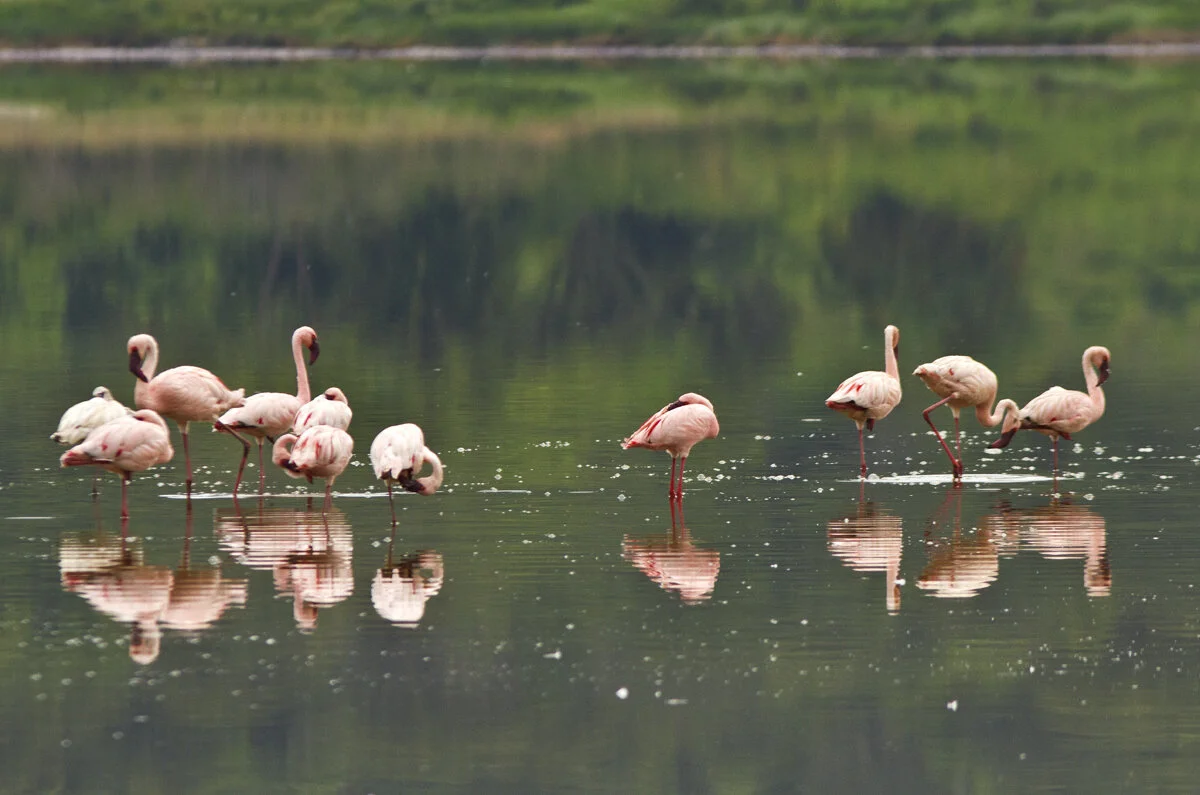
Seasonal flamingos feed in the mineral-rich waters of Lake Bunyampaka.
4. It Can Be Combined With a Kasenyi Plains Game Drive
Lake Bunyampaka’s location makes it an excellent addition to a Kasenyi game drive. The Kasenyi Plains support Uganda kobs, warthogs, buffaloes, elephants, waterbucks and several predators. Lions are frequently searched for in this area because the large kob population provides an important source of prey.
A typical morning may begin with a game drive across the open plains before continuing toward Lake Bunyampaka. The guide can decide the best order according to wildlife reports, road conditions and the interests of the travellers. Flexibility is essential because wild animals move freely and sightings cannot be scheduled.
Travellers can learn more about this wildlife area through Discover the Kasenyi Safari Experience with Wagatil Safaris. Combining the lake and plains creates a balanced excursion involving wildlife, scenery, birdlife and culture.
5. Kasenyi Safari Camp Overlooks Lake Bunyampaka
Kasenyi Safari Camp is one of the accommodation options associated with the Lake Bunyampaka area. The camp is located on the edge of the lake within the Kasenyi savannah, providing convenient access to the game-drive tracks and views across the surrounding wilderness.
Its position makes it attractive to travellers who want to begin game drives early without completing a long transfer from another park sector. Wildlife may pass through the wider camp environment because the accommodation is located inside a natural ecosystem. Guests must therefore follow the camp’s safety guidance, especially when moving between tents and common areas after dark.
The camp’s elevated tents and decks allow guests to appreciate the landscape while remaining in comfortable accommodation. Visitors can read more from the official Kasenyi Safari Camp website or compare other options through Wagatil Safaris’ guide on where to stay around Queen Elizabeth National Park.
Mentioning Kasenyi Safari Camp does not mean every Lake Bunyampaka itinerary must use this property. Wagatil Safaris can recommend budget, mid-range or luxury accommodation according to the client’s preferred comfort, budget and travel route.

Kasenyi Safari Camp provides convenient access to Lake Bunyampaka and the wildlife-rich Kasenyi Plains.
6. The Lake Provides Excellent Photography Opportunities
Lake Bunyampaka appeals to landscape, wildlife, bird and cultural photographers. The mineral shoreline, salt pans, birds and expansive sky provide several possible compositions. The scene can change quickly as clouds move, wildlife approaches the area or sunlight reflects across the water.
Visitors should ask before photographing community members involved in salt extraction. A respectful photographer avoids blocking work areas, disturbing birds or walking across salt pans without permission. A zoom lens can help capture birds and distant details while maintaining an appropriate distance.
Travellers planning a broader photographic safari can combine Bunyampaka with the Kasenyi Plains, Ishasha, crater lakes and a Kazinga Channel safari. Each location offers a different perspective on Queen Elizabeth National Park.
7. Lake Bunyampaka Adds Culture to a Wildlife Safari
Many travellers visit Queen Elizabeth National Park primarily to see lions, elephants, buffaloes, hippos and other animals. Lake Bunyampaka introduces an important human story by demonstrating how neighbouring communities interact with the landscape and maintain local livelihoods.
A responsibly arranged community experience can include explanations about salt collection, changes in the lake, local trade and the challenges of living near a protected area. These conversations help visitors understand that conservation destinations are connected to the people who live and work around them.
Cultural experiences should benefit the host community and respect local preferences. Wagatil Safaris can include Lake Bunyampaka within a tailor-made Uganda safari while balancing wildlife viewing, cultural learning and sufficient relaxation time.
8. It Is Close to Other Queen Elizabeth Attractions
Lake Bunyampaka can be included in a wider itinerary covering several parts of Queen Elizabeth National Park. After exploring Kasenyi, visitors may continue toward the Mweya Peninsula or join a boat safari on the Kazinga Channel.
The Kazinga Channel connects Lake George and Lake Edward and supports hippos, crocodiles, elephants, buffaloes and numerous waterbirds. A boat cruise provides a water-level perspective that contrasts with the open landscapes seen during a Kasenyi game drive.
Travellers staying longer may also explore Kyambura Gorge, the Katwe explosion craters or the Ishasha Sector. Ishasha is especially famous for its tree-climbing lions and can be included when continuing toward Bwindi. These experiences demonstrate why Queen Elizabeth is one of the most varied destinations on a Uganda wildlife safari.

Elephants, buffaloes and waterbirds gather beside the Kazinga Channel in Queen Elizabeth National Park.
9. Lake Bunyampaka Uganda Is Suitable for Different Travellers
The Lake Bunyampaka experience can suit birdwatchers, photographers, couples, families, cultural travellers and visitors who prefer quieter attractions. The visit does not normally require the strenuous hiking associated with gorilla or chimpanzee trekking, although conditions around the shoreline may be hot, dusty or uneven.
Families can use the visit as an educational opportunity to discuss geology, evaporation, salt production, birds and conservation. Parents should supervise children closely and follow the guide’s instructions because the lake is located inside a national park where wild animals move freely.
Families considering a longer visit can explore family safaris in Queen Elizabeth National Park. Activities can be adjusted according to the children’s ages, attention spans and comfort with longer game drives.
10. The Lake Can Be Included in a Longer Uganda Safari
Lake Bunyampaka works particularly well within itineraries connecting Kibale Forest, Queen Elizabeth National Park, Bwindi Impenetrable National Park and Lake Mburo National Park. It can serve as a short scenic and cultural stop between larger activities.
For example, travellers may trek chimpanzees in Kibale, continue to Queen Elizabeth for a Kasenyi game drive and Lake Bunyampaka visit, join a Kazinga Channel cruise and then travel through Ishasha toward Bwindi for gorilla trekking.
Travellers who want a comprehensive route can consider Wagatil Safaris’ 12 Day Best of Uganda Wildlife Safari or the 8-Day Big Five Uganda Tour. These programmes can be customized according to available time, accommodation preference and priority activities.
11. Lake Bunyampaka Remains a Lesser-Known Uganda Attraction
Lake Bunyampaka receives less international attention than the Kazinga Channel, Ishasha’s tree-climbing lions or the mountain gorillas of Bwindi. This makes it valuable for travellers who want to move beyond Uganda’s most widely promoted attractions.
The lake should not be presented as a replacement for a game drive or boat cruise. Instead, it adds variety and context to a Queen Elizabeth safari. The experience encourages visitors to notice landscapes, birds, minerals and community livelihoods rather than concentrating only on large animals.
Including lesser-known attractions can also distribute visitor interest more widely. Wagatil Safaris designs wildlife-viewing safaris that combine famous highlights with quieter locations suited to the traveller’s interests.
Best Time to Visit Lake Bunyampaka Uganda
Lake Bunyampaka can be visited throughout the year, although conditions change with rainfall, temperature, water levels and bird movements. The drier periods generally make the surrounding tracks easier to navigate and can provide clearer opportunities for combining the lake with game drives.
Rainy periods often produce greener landscapes and dramatic skies, which may appeal to photographers. However, some tracks can become slippery, and visitors should allow extra travelling time. Bird sightings also vary seasonally, so travellers interested in flamingos should understand that no responsible operator can guarantee their presence.
Morning and late-afternoon visits often provide more comfortable temperatures and softer light. The final timing should be discussed with the guide because wildlife activity, park regulations and road conditions may affect the day’s programme.
What to Carry for a Lake Bunyampaka Visit
Visitors should carry drinking water, sun protection, closed walking shoes, binoculars and a camera. A light long-sleeved shirt can provide protection from strong sunlight, while a hat and sunscreen are helpful during exposed sections of the visit.
A zoom lens is useful for photographing birds without disturbing them. Travellers visiting during wetter months should carry a light rain jacket and protect cameras and phones from sudden showers. Neutral clothing is generally more practical than very bright colours during wildlife activities.
Cash may be useful when purchasing locally made products, although visitors should ask their guide about appropriate payment arrangements. Personal litter must be carried away, and nothing should be removed from the lake or salt-working areas without permission.
Responsible Tourism at Lake Bunyampaka
Responsible visits protect the environment and respect community livelihoods. Travellers should remain on approved routes, avoid disturbing birds and follow instructions from guides or community representatives. Salt pans should not be entered without permission because they may be fragile, unsafe or actively used for work.
Visitors should never feed wildlife or approach animals for photographs. Noise should be kept low, particularly near birds. Purchasing permitted products directly from community members can support local livelihoods, but travellers should avoid encouraging activities that damage the lake environment.
Following the guidance of the Uganda Wildlife Authority and experienced local guides helps preserve Lake Bunyampaka for future visitors. Wagatil Safaris incorporates responsible practices across its East Africa safari programmes.
How to Include Lake Bunyampaka in Your Safari
The easiest way to experience Lake Bunyampaka is to include it within a Queen Elizabeth National Park itinerary. A possible day may begin with an early Kasenyi game drive, continue with a guided lake and community visit and finish with relaxation or an afternoon boat cruise.
The exact arrangement depends on accommodation location, park entry time, road conditions and the traveller’s interests. Visitors staying at or near Kasenyi Safari Camp may have particularly convenient access to the lake and nearby game-drive tracks.
Wagatil Safaris can combine Lake Bunyampaka with the Kasenyi Plains, Kazinga Channel, Kyambura Gorge, Ishasha and other Ugandan destinations. The itinerary can be created for solo travellers, couples, families or private groups.
Frequently Asked Questions About Lake Bunyampaka Uganda
Is Lake Bunyampaka inside Queen Elizabeth National Park?
Yes. Lake Bunyampaka is located in the Kasenyi area of Queen Elizabeth National Park in western Uganda. Visitors should follow national-park regulations and travel with an authorized guide.
Is Lake Bunyampaka a freshwater lake?
No. Lake Bunyampaka is generally described as a saline or soda crater lake because evaporation concentrates minerals and salts in its water.
Can visitors see flamingos at Lake Bunyampaka?
Flamingos may appear depending on seasonal movements and suitable lake conditions. Their presence is not guaranteed, so travellers should appreciate the wider birdlife, scenery and cultural experience.
Is salt still extracted from Lake Bunyampaka?
Traditional salt extraction has been associated with the lake and nearby community. Access to working areas and the availability of demonstrations may vary, so visits should be arranged in advance.
Can Lake Bunyampaka be visited during a Kasenyi game drive?
Yes. Its location makes it convenient to combine with wildlife viewing on the Kasenyi Plains. Your guide will select the best route based on time and road conditions.
Where can visitors stay near Lake Bunyampaka?
Kasenyi Safari Camp is situated beside the lake and offers convenient access to the surrounding plains. Other accommodation options are available throughout Queen Elizabeth National Park for different budgets.
Is Lake Bunyampaka suitable for children?
It can be suitable for children when the visit is properly supervised. Families must follow guide instructions because the lake lies within an active wildlife area.
Plan Your Lake Bunyampaka Safari With Wagatil Safaris
Lake Bunyampaka may not be Queen Elizabeth National Park’s most famous attraction, but its combination of saline water, crater scenery, birdlife, traditional salt extraction and access to the Kasenyi Plains makes it a meaningful addition to a Uganda safari.
A visit becomes even more rewarding when combined with a Kasenyi game drive, accommodation at or near Kasenyi Safari Camp and a Kazinga Channel boat cruise. Together, these experiences reveal the wildlife, landscapes and communities that make Queen Elizabeth National Park exceptional.
Wagatil Safaris can design a private itinerary featuring Lake Bunyampaka and other top Uganda safari experiences. Whether you are interested in wildlife, birds, photography or culture, the journey can be adjusted around your available time and preferred travel style.
Contact Wagatil Safaris to begin planning a personalized visit to Lake Bunyampaka, Kasenyi Safari Camp and Queen Elizabeth National Park.


