
What Happens If It Rains During Gorilla Trekking in Uganda? 11 Essential Tips

Delayed Luggage Before a Uganda Safari: 11 Critical Solutions
September 22, 2026
Can You Leave a Gorilla Trek Early in Uganda? 9 Important Facts
September 22, 2026

Rain during gorilla trekking
Rain during gorilla trekking is a normal possibility because Uganda’s mountain gorillas live in naturally moist forest environments. A morning may begin with clear skies around your lodge before mist gathers over the hills and rain starts falling as your group follows the ranger guides deeper into the forest.
This change in weather does not automatically mean that the trek will be cancelled. Gorilla trekking in Uganda operates throughout the year, including during wetter months. Visitors should therefore arrive prepared for rain whether they travel during a recognised wet season or one of the country’s relatively drier periods.
The main difference is that rain can make the forest trails wetter, muddier and more slippery. It may slow the group’s walking pace, reduce visibility in some areas and require greater care when moving across steep slopes, exposed roots and thick vegetation.
Rain can also produce an atmospheric forest experience. Mist settles between the trees, leaves become brighter, streams gain more water and the entire landscape feels like the ancient rainforest environment visitors imagined before travelling to Uganda.
Preparation is therefore more important than fear. Suitable boots, a waterproof jacket, long clothing, gardening gloves, a protected camera and assistance from a porter can make an enormous difference when the forest becomes wet.
This guide explains whether gorilla trekking continues during rain, how wet weather affects the trails, what mountain gorillas may do, which equipment works best and how Wagatil Safaris can help you prepare for a comfortable Uganda gorilla adventure.
Does Gorilla Trekking Continue When It Rains?
In most situations, gorilla trekking continues when it rains. Rainfall is a natural part of the environment in which mountain gorillas live, and the activity is not ordinarily suspended because of a normal forest shower.
The official Uganda Wildlife Authority gorilla-tracking information explains that gorilla trekking takes place in Bwindi Impenetrable National Park and Mgahinga Gorilla National Park. Trekkers should have moderate fitness because the complete experience can last several hours.
Visitors assemble at the designated park headquarters in the morning, complete registration and attend a ranger briefing. They are then organised into trekking groups before entering the forest with trained guides and trackers.
If rain begins after the group enters the forest, the ranger guide will normally assess the immediate conditions and continue at a suitable pace. Trekkers may be asked to slow down, keep closer together or wait briefly in a safer place during a particularly intense shower.
The ranger guide remains the person whose safety instructions should be followed. Travellers should not independently leave the group, rush downhill or attempt to create a different route simply because the trail has become wet.
A light or moderate shower may have little effect on the overall programme when the group is properly dressed. The trek continues, the trackers continue following signs and the visitors still have the opportunity to meet their assigned gorilla family.
Rain does not cause mountain gorillas to disappear from the forest. They remain within their natural habitat, although their exact location and behaviour can change according to food availability, family movement and local weather conditions.
Can Heavy Rain Cancel Gorilla Trekking in Uganda?
Ordinary rainfall should not be treated as an automatic cancellation. Bwindi and Mgahinga are forest environments, and visitors must arrive expecting conditions that can change during the day.
Exceptionally severe weather may create a different situation. If park management determines that a trail, river crossing, landslide-prone slope or another section of the forest presents an unacceptable danger, safety considerations will guide the decision.
This should not be interpreted as a promise that a trek will always proceed under every possible condition. Weather can affect roads, trails and access points differently, and decisions must be based on the actual circumstances at the park.
The traveller should avoid deciding independently that the trek has been cancelled. Rain falling at a lodge during the early morning does not necessarily reflect conditions throughout the forest or at the trekking headquarters.
Visitors should prepare normally, eat breakfast and remain ready to depart unless Wagatil Safaris, the lodge or the relevant park authority provides different instructions.
Skipping the activity because rain appears likely can have serious consequences. Gorilla permits are issued for scheduled trekking dates, and a visitor should not assume that an unused permit can simply be moved to another day.
When rain is forecast, the correct response is preparation rather than immediate cancellation. The traveller should organise waterproof clothing, protect important equipment and follow the guide’s directions.
Travellers concerned about the weather can contact Wagatil Safaris before the trekking day. The company can communicate with the guide, confirm the morning arrangements and help the visitor review the required clothing.
Rain During Gorilla Trekking at a Glance
1. Understand Why Rain Is Normal in Gorilla Habitat
Mountain gorillas in Uganda are protected within Bwindi Impenetrable National Park and Mgahinga Gorilla National Park. These are green, highland environments where moisture supports thick vegetation and diverse wildlife.
Bwindi contains both lowland and montane forest across a landscape of hills, valleys, streams and dense plant growth. UNESCO recognises Bwindi Impenetrable National Park for its exceptional biodiversity and ecological importance.
Mgahinga lies within the Virunga Mountains and contains bamboo and montane habitats. Its higher elevation can create cool, misty and rapidly changing conditions, especially on exposed parts of the trail.
Visitors should therefore avoid thinking of Uganda’s “dry season” as a promise of completely dry weather. The description refers to periods that are generally drier than the principal rainy months, not an absence of rainfall.
A bright morning can turn cloudy as moisture gathers around the hills. Rain may fall briefly in one part of the forest while another area remains relatively dry.
Vegetation can also stay wet after the rain stops. Leaves, vines and branches may continue dripping onto trekkers as they move through narrow sections of the forest.
This is why waterproof preparation matters throughout the year. A traveller visiting during a popular drier period should still carry a rain jacket and protect electronic equipment.
Rain also contributes to the beauty that makes gorilla habitat extraordinary. The moisture supports lush vegetation, forest streams, moss-covered trees, ferns and other plants forming the mountain gorillas’ natural home.
2. How Rain Changes the Gorilla-Trekking Trail
The most noticeable effect of rain is the change in the forest floor. Dry soil can become soft mud, while exposed roots, stones and wooden trail structures may become slippery.
The group’s walking pace may slow because every participant needs enough time to place their feet safely. This slower pace should not be considered a failure or unnecessary delay.
Rangers understand the local terrain and can identify safer places to step. Trekkers should follow the guide’s path instead of moving around the group in search of what appears to be an easier route.
Uphill sections may require shorter, controlled steps. On descents, rushing or leaning too far backwards can reduce stability, particularly when the ground is wet.
A walking stick can provide another point of contact with the ground. Sticks may be available through the lodge or near the briefing area, depending on local arrangements.
Gardening gloves are helpful because trekkers may need to hold vegetation, branches or a walking stick. Gloves also protect the hands from mud and rough plants.
Wet conditions can be more demanding for people with knee, hip, ankle or balance concerns. Such travellers should discuss their needs before the trek rather than waiting until the group is deep inside the forest.
Wagatil Safaris can help communicate mobility concerns when arranging a Uganda gorilla experience. The final trekking allocation and field decisions remain subject to park procedures and conditions on the day.
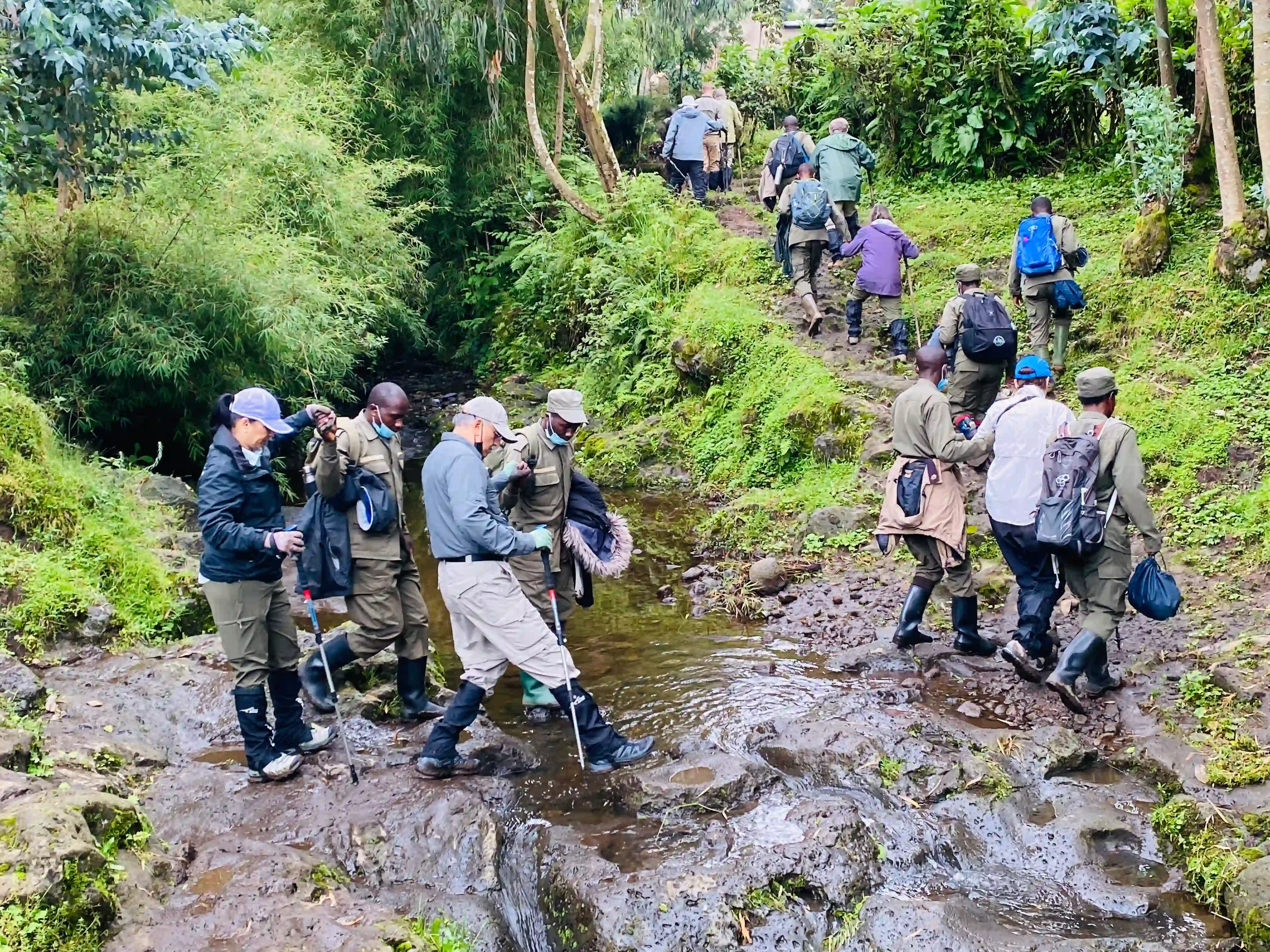
Trekkers using walking sticks while crossing a wet and uneven rainforest trail.
3. What Mountain Gorillas Do When It Rains
Mountain gorillas remain within their natural habitat when rain begins. They do not return to shelters, tourism buildings or artificial enclosures because they live freely in the forest.
Individual gorillas and families may react differently according to the intensity of the rain, vegetation, temperature and location. Visitors should not expect every family to display the same behaviour.
During a shower, gorillas may sit close together, remain beneath thick vegetation or reduce their movement. Dense leaves and branches can provide partial protection from direct rainfall.
Young gorillas may remain closer to their mothers, while adults may sit quietly and wait for the strongest rain to pass. These are possible observations rather than behaviours that can be promised on every trek.
Gorillas may also continue feeding when suitable vegetation is available. Their daily movements are influenced by food, family dynamics and the wider forest environment, not only by rainfall.
Rain can affect photography because gorillas may sit beneath vegetation or turn away from the direction of the falling water. Light levels can also become lower beneath the forest canopy.
Visitors should remain patient and allow the ranger guide to position the group appropriately. Moving without permission in search of a clearer angle can disturb the encounter and create safety problems on wet ground.
A rainy encounter can produce powerful photographs when equipment is protected correctly. Wet fur, mist and deep green vegetation may create a dramatic representation of mountain gorillas living naturally in a rainforest.
Travellers interested in gorilla behaviour can read Wagatil Safaris’ guide to a day in the life of a gorilla family in Bwindi.

A mountain gorilla surrounded by the damp vegetation of Bwindi Impenetrable National Park.
4. Wear Waterproof Boots With Reliable Grip
Footwear is one of the most important preparations for rain during gorilla trekking. The correct boot should provide traction, ankle support and reasonable protection from moisture.
Ordinary fashion trainers may feel comfortable on a dry hotel pathway but perform poorly in deep mud. Smooth soles can slip, while lightweight fabric may quickly absorb water.
Choose walking or hiking boots with a clearly defined tread. The sole should grip soft ground, wet roots and uneven forest surfaces more effectively than a flat everyday shoe.
Waterproof or water-resistant construction helps keep the feet comfortable, although no boot can guarantee complete dryness when walking through deep mud or persistent rain.
The boots should be worn before travelling. A gorilla trek is not the right occasion to test new footwear for the first time because stiff materials and unfamiliar pressure points can cause blisters.
Strong, moisture-managing socks provide additional protection. Some visitors use gaiters to cover the area between their trousers and boots, helping reduce the amount of mud, water and vegetation entering from above.
Tuck the ends of long trousers into the socks or gaiters where appropriate. This arrangement provides additional protection from wet vegetation and insects.
After trekking, remove the insoles where practical and allow the boots to dry naturally. Avoid placing delicate footwear directly against intense heat because excessive temperatures may damage adhesives and waterproof materials.
5. Choose a Proper Rain Jacket Instead of Depending on an Umbrella
A lightweight waterproof jacket is generally more practical than an umbrella during gorilla trekking. Forest paths can be narrow, and trekkers may need both hands for balance, a walking stick or assistance from a porter.
An umbrella can catch on branches, obstruct another visitor or become difficult to control on a steep trail. It may also interfere with the group when everyone is trying to move carefully through thick vegetation.
Choose a jacket with a secure hood, adjustable cuffs and enough space for a light insulating layer underneath. The garment should protect the upper body without being so loose that it catches repeatedly on plants.
A breathable waterproof jacket is preferable because forest walking generates heat even during cool weather. A completely non-breathable outer layer may trap sweat and leave the traveller wet from the inside.
A long plastic poncho can cover both the traveller and part of the backpack. However, loose material may catch on vegetation, flap across the face or restrict the view of the ground.
If you prefer a poncho, select a strong design that can be secured around the body. Thin disposable plastic coverings can tear easily on branches and create avoidable waste.
Keep the rain layer near the top of the backpack. Packing it beneath food, camera equipment and other items creates unnecessary delay when rain begins suddenly.
Long sleeves and long trousers remain useful beneath the waterproof layer. They protect the skin when wet vegetation presses against the arms and legs.
6. Protect Your Backpack, Documents and Food From Rain
A waterproof jacket protects the traveller, but the items inside the daypack also require attention. Rain can enter through zips, seams and areas where water collects against the fabric.
Use a fitted backpack rain cover as the first layer of protection. Because a cover may not prevent water entering from the side against the traveller’s back, place important objects inside sealed waterproof bags.
Keep your passport or identification documents inside a secure waterproof pouch. Do not allow documents to remain loosely inside an ordinary backpack pocket.
Packed food should be protected from rain and separated from other equipment. Follow the ranger’s instructions regarding where and when food may be consumed.
Keep drinking water in a securely closed bottle. Hydration remains important during cool or rainy conditions because physical exertion continues even when the traveller does not feel particularly warm.
A small dry bag or strong resealable pouch can protect a telephone, power bank, spare camera battery and memory cards. Each item should be individually secured rather than placed beneath a jacket without further protection.
Carry a small absorbent cloth for wiping moisture from the outside of equipment. The cloth should remain in its own waterproof pouch until required.
Avoid overpacking. A heavy backpack becomes more difficult to carry when the trail is wet, and attention that should be directed toward balance may instead be spent adjusting unnecessary equipment.
Hiring a porter allows the visitor to walk with less weight and concentrate on the trail. Porters can also help keep the daypack secure when difficult sections require both hands.
7. Protect Your Camera When There Is Rain During Gorilla Trekking
Rain during gorilla trekking can create beautiful photographic conditions. Moisture deepens the green colour of the forest, mist adds atmosphere and water droplets can make close-up gorilla portraits especially powerful. However, the combination of rain, humidity, mud and sudden temperature changes can also damage an unprotected camera, phone or lens.
Place your camera inside a waterproof dry bag or a properly sealed section of your backpack while walking. A normal fabric camera bag may resist light moisture, but it should not be trusted during prolonged tropical rain unless it has a fitted waterproof cover.
Keep a small microfibre cloth in a sealed plastic pouch. It can be used to remove droplets from the front of your lens before taking photographs. Avoid wiping a lens with a wet shirt, tissue or rough material because this can smear the glass or damage its protective coating.
A lens hood is useful even when the sun is not shining. It helps prevent falling droplets from landing directly on the front of the lens. It can also protect the lens from wet branches as you move through thick forest vegetation.
Do not change lenses unnecessarily inside the rainforest. Opening the camera allows moisture, dust and tiny particles to enter the camera body. If you intend to use a particular lens during the gorilla encounter, attach it before leaving your lodge or while standing in a protected place near the briefing centre.
A zoom lens is generally more convenient than carrying several lenses. It gives you flexibility when a gorilla changes position without requiring you to move closer or change equipment.
During the actual encounter, listen carefully to the ranger’s instructions. Do not use flash photography. Flash may disturb the gorillas and is prohibited during the experience. Prepare your camera settings before reaching the family so that you do not spend the limited viewing time working through menus.
Travellers using a smartphone should carry a waterproof phone cover or resealable protective pouch. Make sure the pouch does not obstruct the camera lens. A wrist strap can provide extra security, but it should not hang loosely where it may catch on vegetation.
After returning to the lodge, dry the outside of the equipment before opening battery or memory-card compartments. Allowing the camera to adjust gradually to indoor temperature can help reduce condensation. Silica-gel packets placed in the camera bag may also help absorb residual moisture.
For more preparation advice, read the Wagatil Safaris guide on what to pack for a gorilla trekking safari in Uganda and Rwanda.
8. Hire a Porter for Rain During Gorilla Trekking
Hiring a porter is one of the most practical decisions you can make when expecting rain during gorilla trekking. A porter can carry your backpack, water, packed lunch and additional clothing, leaving you free to concentrate on your footing.
A bag that feels light at the briefing centre can become uncomfortable after several hours of climbing. Rainwater may increase its weight, while steep and muddy sections require more balance and physical effort.
Porters are familiar with the local terrain and understand how quickly forest conditions can change. Although the ranger remains responsible for directing the trekking group, a porter can offer a steady hand when you cross a stream, climb a slippery bank or descend a muddy slope.
Hiring a porter should not be viewed as something reserved for elderly visitors or people with limited fitness. Strong and experienced hikers can also benefit, particularly when the forest is wet. Carrying less weight helps conserve energy for the return journey, which may be as physically demanding as the walk towards the gorillas.
If you have mobility concerns, tell your tour operator before travelling. Additional assistance may sometimes be organised, subject to local availability and operating arrangements. Discussing these requirements early is much better than waiting until the morning of the trek.
Porter arrangements are normally made near the park briefing area. Ask your safari company what payment method is recommended and whether porter charges are included in your package. Carry suitable cash if payment must be made locally.
Your porter should still be paid if the trek turns out to be shorter than expected. The service was reserved for the day, and the length of a trek cannot be predicted because gorillas move freely through their habitat.
When booking a Uganda gorilla experience, ask Wagatil Safaris to explain the porter arrangements for your selected Bwindi sector or Mgahinga trekking point.
9. Prepare Physically for Wet Gorilla-Trekking Trails
Rain during gorilla trekking can make an otherwise manageable walk more demanding. The challenge is not always the total distance. Steep gradients, uneven ground, exposed roots, thick vegetation and repeated climbs can tire the legs quickly.
Begin preparing several weeks before travelling. Regular walking is helpful, but walking only on flat roads may not provide enough preparation. Include hills, stairs or inclined treadmill sessions where possible.
Exercises that improve balance and leg strength can also help. Squats, controlled step-ups and gentle lunges prepare the muscles used when climbing or lowering yourself down a slope. Travellers with existing joint, heart or mobility conditions should seek appropriate medical advice before starting a new exercise programme.
Move at a steady pace during the trek. Trying to remain immediately behind the fastest person can cause unnecessary fatigue. Trekking groups normally make short stops, and visitors should communicate honestly if they need a moment to recover.
Short, careful steps are often safer than long strides on muddy ground. Test uncertain surfaces with a walking stick before placing your full weight on them. Avoid stepping directly onto exposed roots or smooth rocks when an alternative is available because both can become very slippery.
Drink water regularly, even when cool weather makes you feel less thirsty. High humidity and physical activity still cause fluid loss. Carry an appropriate amount of water based on advice from your guide.
Eat breakfast before leaving the lodge and carry the packed food provided for the trek. It may be several hours before you return. However, never eat close to the gorillas. Follow your ranger’s directions about where and when the group may stop for food.
Travellers who are concerned about difficulty should discuss their fitness honestly during planning. It may be possible to consider access routes, accommodation location and other practical factors when building the itinerary, although no company can guarantee that a particular gorilla family will be close to the trailhead.
The article about the best Bwindi sector for beginner gorilla treks provides additional planning information. Remember that gorilla locations and trail conditions change, so no sector can promise an easy trek every day.
10. Follow the Rangers’ Instructions During the Gorilla Encounter
The most important rule when rain falls during the gorilla encounter is to remain calm and follow the ranger’s instructions. Mountain gorillas live in this environment throughout the year and are accustomed to changing forest weather.
Gorillas may continue feeding, sit beneath vegetation, rest together or move to another position. Their behaviour depends on the intensity of the rain, the location of the family and normal social activity within the group.
Do not move closer simply because vegetation or rain makes photography difficult. Maintain the distance directed by the ranger and never try to reposition yourself independently.
If a gorilla moves towards you, remain calm and follow the ranger’s directions. Do not run, point aggressively or make sudden movements. The ranger will tell the group when to crouch, remain still or move carefully.
Keep voices low. Excited shouting can disturb both the animals and other visitors. The sound of rain can make instructions harder to hear, so pay close attention whenever the ranger speaks.
Flash photography is not allowed. Check that the flash is disabled before the gorillas are located, especially when using automatic camera settings that may activate it in low forest light.
Keep food, drinks and loose belongings packed away. Do not eat or drink while close to the gorillas. If rain enters your backpack, wait until the ranger identifies a suitable place before opening it and reorganising your belongings.
Visitors should also avoid touching vegetation unnecessarily during the encounter. The ranger may direct where the group can stand or sit without interfering with the gorillas’ route.
The standard viewing period is limited, and the time generally continues even when rain falls. Use the experience to observe the family rather than concentrating entirely on photography. A wet encounter may still become one of the most memorable moments of your entire Uganda safari.
You can learn more about gorilla group behaviour in Wagatil Safaris’ guide to gorilla families in Bwindi.
11. Dry Your Clothing and Equipment After Rain During Gorilla Trekking
Proper post-trek care is essential when clothes, boots and equipment have become wet. Leaving muddy boots or damp clothing packed overnight can create unpleasant odours, damage materials and make the next day uncomfortable.
Remove wet clothing as soon as you return to the lodge. Change into dry, warm layers, particularly if the temperature is cool. A warm shower and hot drink can help you recover after several hours in wet forest conditions.
Clean mud from your boots before it dries completely. Use a soft brush and a small amount of clean water where appropriate. Do not place leather or technical footwear directly against an open fire, heater or very hot surface because intense heat can damage the material and weaken adhesives.
Remove the insoles and loosen the laces so that air can circulate inside the boots. Stuffing the footwear loosely with dry paper may help absorb moisture, although the paper should be replaced when it becomes wet.
Hang rain jackets and gaiters in a ventilated place. Follow the manufacturer’s washing instructions after your journey because strong detergents can damage the waterproof coating on technical clothing.
Open your backpack only after drying its exterior. Check the internal compartments for moisture, particularly around documents and electronics. Even when the main contents appear dry, condensation may remain inside plastic covers and camera bags.
Recharge camera batteries, phones and power banks once the equipment is dry and has adjusted to the indoor temperature. Back up your photographs if you have a second device or cloud access available.
Tell the lodge staff or your guide if you develop persistent chills, feel unwell or suffer an injury during the trek. Small scratches should be cleaned, and wet feet should be checked for blisters before the next day’s activities.
Careful recovery is especially important when your itinerary continues to Queen Elizabeth National Park, Lake Bunyonyi or another destination the following morning.
Rain During Gorilla Trekking in Bwindi and Mgahinga
Uganda offers mountain gorilla trekking in Bwindi Impenetrable National Park and Mgahinga Gorilla National Park. Rain can occur in either destination, but their landscapes create somewhat different trekking experiences.
Bwindi is a large, mountainous rainforest with four principal trekking sectors: Buhoma, Ruhija, Rushaga and Nkuringo. Conditions can vary between the different sides of the forest. One sector may receive rain while another remains comparatively dry.
The dense vegetation in Bwindi can hold moisture long after rain has stopped. Leaves may continue dripping onto trekkers, while shaded paths can remain muddy. Waterproof clothing is therefore useful even when the morning begins with clear skies.
Mgahinga lies within the Virunga volcanic landscape. Treks can involve bamboo zones, montane forest and slopes influenced by elevation. Rain, mist and cool temperatures can occur, so visitors should carry warm and waterproof layers.
Neither park can guarantee a dry trekking day. Your choice should instead consider permit availability, the wider safari route, accommodation, travel time and the kind of landscape you would like to experience.
Official destination information is available from the Uganda Wildlife Authority pages for Bwindi Impenetrable National Park and Mgahinga Gorilla National Park.
Rain During Gorilla Trekking in the Four Bwindi Sectors
Rain During Gorilla Trekking in Buhoma
Buhoma is situated on the northern side of Bwindi. It has a long-established tourism area with several accommodation choices and connections towards the Ishasha sector of Queen Elizabeth National Park.
Wet weather can affect unpaved roads and forest paths around Buhoma. Travellers arriving from another national park should allow reasonable transfer time and avoid planning a tight arrival immediately before the trekking briefing.
Rain During Gorilla Trekking in Ruhija
Ruhija is positioned in eastern Bwindi at a relatively high elevation. Mornings can feel cool, and rain or mist may reduce visibility on surrounding roads.
The area is also recognised for birding. Travellers combining gorilla trekking with forest birdwatching should pack waterproof binocular protection and clothing that performs well during slow walks through damp vegetation.
Rain During Gorilla Trekking in Rushaga
Rushaga is one of Bwindi’s southern trekking areas and is commonly included in itineraries connecting with Kisoro, Lake Mutanda or Kigali.
Because rain can slow travel on regional roads, visitors should stay near the correct trekking point on the night before their permit date. A lodge should not be selected merely because it is described as being “in Bwindi.” Its location must correspond with the sector shown on the permit.
Rain During Gorilla Trekking in Nkuringo
Nkuringo is known for its dramatic highland scenery and steep surrounding terrain. Wet conditions can make slopes more demanding, increasing the value of strong boots, gaiters, a walking stick and porter assistance.
The scenery can be exceptional when clouds lift after rain, but travellers should prepare for changing conditions rather than depending on a particular weather forecast.
Read the complete guide to Bwindi’s gorilla trekking sectors before reserving accommodation.
Is Gorilla Trekking Better in the Dry Season?
Uganda’s relatively drier periods are popular because forest trails may be less muddy and road travel can be easier. However, a “dry season” in a tropical mountain forest does not mean rain is impossible.
A clear morning can become cloudy quickly. Localised rain may occur even when a general forecast predicts dry weather. Every gorilla trek should therefore be approached as a possible wet-weather activity.
Demand may be higher during popular travel periods, affecting the availability of permits, guides, vehicles and preferred accommodation. Booking early is particularly important when your international flights allow little flexibility.
Dryer paths may improve walking comfort, but they do not guarantee a short or easy trek. The gorillas’ location remains one of the most important factors affecting the day’s walking time.
Is Gorilla Trekking Worth It in the Rainy Season?
Gorilla trekking during wetter months can still be deeply rewarding. Rain refreshes the forest, intensifies its colours and creates the misty atmosphere many travellers associate with Bwindi.
Some visitors may appreciate travelling during quieter periods. Accommodation availability can sometimes be more flexible, although prices and promotions should always be checked for the intended dates.
The disadvantages are practical. Trails may be muddier, road transfers can take longer and keeping photography equipment dry requires more preparation. Travellers must be comfortable with uncertainty and should avoid building an itinerary around perfectly clear weather.
The rainy season may suit adventurous visitors who pack correctly and accept the conditions as part of the rainforest experience. It may be less suitable for somebody with serious mobility concerns or a strong dislike of walking in mud.
The decision should be made according to your physical ability, expectations and complete safari route—not simply the possibility of paying a lower seasonal price.
For another perspective on the destination, see Gorilla Travels Africa’s guides to Bwindi Impenetrable National Park and Mgahinga Gorilla National Park.
Advantages of Rain During Gorilla Trekking
Rain is often described only as an inconvenience, but it can add special qualities to the experience.
The forest can look exceptionally vivid after rainfall. Ferns, moss, vines and broad leaves become saturated with colour, creating striking backgrounds for photography.
Mist moving between forested ridges can produce atmospheric landscape views. The softer light may also reduce harsh shadows on a gorilla’s face, although photographers will need to manage slower shutter speeds and limited light.
Rain can make the forest feel quieter and more immersive. Visitors become more aware of dripping leaves, birds and the movement of animals in the vegetation.
The gorillas remain in their natural habitat rather than being brought to a controlled viewing area. Experiencing rain demonstrates that the trek is a genuine wildlife encounter inside a living rainforest.
Challenges of Rain During Gorilla Trekking
The greatest challenge is usually the condition of the trail. Mud reduces traction, while wet roots and rocks can be difficult to see beneath leaves.
Rain can also make the group feel cold during stops. Trekking generates body heat, but temperatures may drop quickly when visitors remain stationary during the gorilla encounter. Breathable layers help manage the transition between strenuous walking and quiet observation.
Photography becomes more difficult because of low light and water on the lens. Travellers may need to increase the camera’s ISO, use a wider aperture or stabilise the camera carefully.
Wet weather can extend road-transfer times. This is especially relevant when travelling between Bwindi sectors or connecting with an airstrip. Flexible planning and suitable vehicles become important.
None of these challenges makes the trek unsuccessful. They simply make proper preparation more valuable.
What to Wear When Expecting Rain During Gorilla Trekking
Choose clothing that keeps you protected without causing excessive heat while walking.
Wear a breathable base layer that moves moisture away from your skin. Cotton can remain wet for a long time, so quick-drying technical fabric is generally more comfortable.
A lightweight fleece or warm middle layer may be needed during the cool morning briefing. It can be removed and stored in a waterproof bag when the trek becomes warmer.
Your outer layer should be a waterproof jacket with a secure hood. It should be large enough to cover the layers beneath it without restricting arm movement.
Wear long trousers made from reasonably durable, quick-drying material. Shorts leave the legs exposed to vegetation, insects, mud and scratches.
Tuck the bottom of the trousers into long socks or wear gaiters. This arrangement helps prevent mud, water and small insects from entering your boots.
Waterproof hiking boots with a supportive sole are preferable to normal trainers. Use boots that have already been worn and tested. Brand-new footwear can cause severe blisters during a long forest walk.
Gardening or trekking gloves protect the hands when holding wet vegetation or using the ground for support. Choose gloves that provide grip without being excessively bulky.
A brimmed hat may help during light rain, but it should not replace a proper waterproof hood.
Rainy Gorilla-Trekking Packing Table
Rain During Gorilla Trekking for Older Travellers
Age alone does not determine whether someone can complete a gorilla trek. Health, balance, stamina, previous walking experience and trail conditions are more important considerations.
Older travellers should discuss their physical needs while planning the safari. They should not wait until the briefing begins to mention significant mobility concerns.
Hiring a porter is highly recommended. Walking poles or a locally supplied walking stick can also provide stability on wet ground.
Allow time to recover after the trek. Avoid scheduling a demanding activity or an unnecessarily early, lengthy transfer immediately afterwards.
Travel insurance should cover the activities and destinations included in the itinerary. Visitors with medical conditions should travel with sufficient medication and any information their guide may need in an emergency.
Rain During Gorilla Trekking With Teenagers
Uganda applies a minimum age requirement for gorilla trekking, so families must confirm that every participating child meets the current rules before purchasing permits.
Eligible teenagers should understand that the experience is not a short zoo visit. It may require several hours of walking through wet, steep and unfamiliar terrain.
Ensure that every family member has correctly fitted boots and personal rain protection. Sharing one oversized poncho or carrying unsuitable trainers can make the trek unnecessarily uncomfortable.
Parents should discuss behaviour around gorillas in advance. Teenagers must be able to follow the ranger’s instructions, remain calm, speak quietly and avoid sudden movements during the encounter.
Families can combine gorilla trekking with more relaxed experiences such as visiting Lake Bunyonyi or including game drives elsewhere in Uganda.
Photographing Gorillas in Rain and Low Light
Rainforest photography often involves low light, particularly beneath a dense canopy. Automatic camera settings may choose a shutter speed that is too slow to freeze movement.
Increase the ISO when necessary and use the widest practical aperture. Select a shutter speed capable of handling the gorilla’s movement and your own hand movement.
Image stabilisation can help with camera shake, but it cannot freeze a moving animal. Review a few photographs early in the encounter to confirm that the eyes are sharp.
Expose for the gorilla rather than the bright sky or reflective wet leaves. Dark fur can lose detail if the camera underexposes the subject.
Continuous or burst mode may help when a gorilla changes expression, but do not spend the entire encounter looking through the camera. Take time to observe the family directly.
Never use flash, and do not leave equipment where a gorilla or another visitor could step on it.
Common Mistakes When Rain Is Forecast
One common mistake is leaving rain gear at the lodge because the morning sky looks clear. Mountain weather can change quickly, and the forest canopy may remain wet from overnight rain.
Another mistake is wearing casual sports shoes. Their soles may lack the traction and ankle support required for muddy forest paths.
Some travellers place all their protection around the backpack but forget the items in their pockets. Passports, money and phones should each have waterproof protection.
Carrying an umbrella can create difficulties on narrow trails because one hand is needed to hold it. It can catch on branches and interfere with other trekkers. A fitted hood usually provides more practical protection.
Visitors may also overdress. Heavy clothing can cause overheating during steep climbs. Breathable layers are better than one thick garment.
Waiting until trekking morning to report a health or mobility concern is another avoidable mistake. Advance communication allows the operator to discuss suitable support and realistic arrangements.
Frequently Asked Questions About Rain During Gorilla Trekking
Does gorilla trekking continue when it rains?
Gorilla trekking generally continues during normal rainfall because rain is a natural feature of Uganda’s mountain-forest environment. Operations may be adjusted when park authorities identify an exceptional safety concern. Travellers must follow the instructions issued by rangers and park management.
Will rain prevent me from seeing mountain gorillas?
Rain by itself does not mean you will not see gorillas. Trackers and rangers continue following the allocated family according to operating procedures. Mountain gorillas remain within their natural forest habitat during wet weather.
However, every wildlife experience involves natural uncertainty. Sightings should not be described as an unconditional guarantee.
Do gorillas hide when it rains?
Gorillas may sit beneath thick vegetation, remain close together, rest or continue feeding. Their response can vary with the intensity of the rain and the family’s activity. They do not leave the forest merely because rain has begun.
Is gorilla trekking dangerous in heavy rain?
Wet trails can increase the risk of slipping, falling or becoming cold. Rangers assess conditions and guide visitors through the forest. Suitable footwear, sensible pacing, porter assistance and close attention to instructions reduce avoidable risks.
Should I take an umbrella on a gorilla trek?
A compact umbrella may help at the briefing point, but it is often impractical on narrow forest trails. A waterproof jacket with a secure hood allows both hands to remain available for balance.
Are ponchos suitable for gorilla trekking?
A good-quality poncho can provide broad rain coverage, but very loose material may catch on vegetation. A fitted waterproof jacket is often easier to manage. Some travellers carry both a jacket and a lightweight poncho for additional protection.
Do I need waterproof trousers?
Waterproof over-trousers can be useful during persistent rain. Breathable, quick-drying trekking trousers may be sufficient during lighter showers. Avoid heavy materials that retain water for a long time.
Are waterproof boots necessary?
Waterproof hiking boots with reliable grip are strongly recommended. The trail may include mud, streams, roots, stones and steep ground. Boots should be broken in before the safari.
Can I take photographs while it is raining?
Yes, provided the ranger permits photography from your position and you keep the equipment protected. Use a lens hood, waterproof cover and dry cloth. Disable the flash before reaching the gorillas.
Is gorilla trekking easier during the dry season?
Trails may be less muddy during relatively drier periods, but rain remains possible throughout the year. Gorilla movement, altitude, terrain and individual fitness also affect the trek’s difficulty.
Can my permit be refunded if I dislike the rain?
Rain is a normal natural condition and should not be treated as an automatic reason for a refund. Permit changes, cancellations and refunds are governed by the current Uganda Wildlife Authority rules and booking terms. Check the applicable conditions before paying.
Should I hire a porter when rain is expected?
Yes. A porter can carry your bag and assist on difficult sections, allowing you to concentrate on your footing. Porters can be valuable to trekkers of every age and fitness level.
What happens if my clothes become completely wet?
Carry a sealed spare layer and change as soon as practical after the trek. Dry your body, boots and equipment at the lodge. Tell your guide or lodge staff if you feel unwell or have an injury.
Which Ugandan gorilla park is best during rain?
Neither Bwindi nor Mgahinga can promise dry conditions. The most suitable destination depends on permit availability, accommodation, access route, traveller ability and the wider itinerary.
Can Wagatil Safaris arrange a rainy-season gorilla safari?
Yes. Wagatil Safaris can help coordinate the itinerary, permit planning, transportation, accommodation and pre-trek information, subject to availability and the current requirements of the relevant authorities.
Planning Your Gorilla Trek With Wagatil Safaris
A successful gorilla safari begins long before the trekking morning. The permit date, trekking entry point, lodge location, transportation and traveller’s fitness must work together.
Wagatil Safaris can help travellers understand the differences between Buhoma, Ruhija, Rushaga and Nkuringo. This is important because a lodge described as being near Bwindi may still be a long drive from the entry point printed on your permit.
Your itinerary should include enough time to reach the correct area before trekking day. Arriving late after a long transfer increases stress and leaves little time to prepare clothing, equipment and packed belongings.
When rain is likely, a suitable safari vehicle and a realistic driving schedule become especially important. Road conditions may slow the journey, so transfers should not be calculated using distance alone.
Wagatil Safaris can also integrate gorilla trekking with other experiences. Possible combinations include wildlife viewing in Queen Elizabeth National Park, chimpanzee trekking in Kibale, relaxation at Lake Bunyonyi or a wider Uganda and Rwanda itinerary.
Travellers interested in extending the journey can explore wildlife and gorilla trekking in Uganda or compare the Bwindi and Mgahinga gorilla trekking experiences.
All permit prices, availability, park requirements and booking conditions should be reconfirmed for the intended travel dates. Wildlife policies and tourism arrangements may change, so current official information is more reliable than an old itinerary or screenshot.
Final Thoughts: What Happens If It Rains During Gorilla Trekking?
Rain during gorilla trekking does not have to ruin the experience. It is part of the mountain gorillas’ natural rainforest environment and should be included in your preparation regardless of the month in which you travel.
The difference between an uncomfortable wet trek and an unforgettable forest adventure often comes down to preparation. Waterproof boots, a breathable rain jacket, gaiters, gloves, a protected backpack and porter assistance can make a significant difference.
Move carefully, communicate with the ranger and respect every instruction given during the encounter. Protect your equipment, but do not allow photography to prevent you from appreciating the gorillas directly.
A rain shower may deepen the colours of the forest, create mist across the hills and reveal the mountain gorillas exactly where they belong: inside a wild, living ecosystem.
To plan a properly coordinated gorilla safari, contact Wagatil Safaris for assistance with permits, accommodation, transportation and a personalised Uganda itinerary.


