
Can You Visit a Tea Plantation Near Nyungwe? A Guide to Gisakura and Gisovu

Where Does Your Uganda Safari Driver-Guide Stay at Night?
September 26, 2026
Can You Combine Uganda, Rwanda and Burundi in One Safari? A Complete Three-Country Guide
September 28, 2026

tea plantation near Nyungwe
A tea plantation near Nyungwe is one of the most rewarding additions to a forest itinerary in Rwanda. Yes, you can visit one: the best-known options are Gisakura, on the western edge of Nyungwe National Park, and Gisovu, near its northern edge. A planned visit can include a walk through the tea fields and an introduction to how Rwandan tea is grown and prepared.
The experience offers a different view of the Nyungwe region. Chimpanzee trekking takes you into the rainforest, while a tea visit brings you into a cultivated landscape shaped by the people who work there. Hills planted with neat rows of tea create a striking view beside the forest, making the visit appealing even to travellers who are only occasional tea drinkers.
The key is to arrange the experience rather than assuming you can arrive at an estate and join a tour. Plantation access, guides, tastings and any other activities depend on the arrangements available for your date. This guide explains which plantation to consider, what to ask before booking and how to fit a visit into a realistic Nyungwe itinerary.
Can You Really Tour a Tea Plantation Near Nyungwe?
Yes. Rwanda’s official tourism website identifies Gisakura Tea Estate and Gisovu Tea Estate as major places to experience tea around Nyungwe. It describes tours and tastings at Gisakura, and day tours at Gisovu. These are working tea landscapes, so the visit should be organised with the estate’s arrangements in mind.
A plantation visit is more than a roadside photo stop when a proper tour has been booked. You can spend time learning about the plants and the work involved in producing tea. The exact programme may vary, so ask what your booking includes before expecting a picking demonstration, a tasting or access to a processing facility.
Visit Rwanda advises that plantation visits be set up through a tour operator or Visit Rwanda. If you are travelling with Wagatil Safaris, ask your consultant to include the experience in your itinerary and confirm the arrangements for your chosen day. A confirmed booking gives you a clearer plan than simply asking your driver to stop at the estate gate.
Where Are Gisakura and Gisovu Tea Estates?
Gisakura lies along the western fringes of Nyungwe National Park. It is a particularly appealing choice if your itinerary already places you on that side of the forest. The planted hills and neighbouring forest give the area its distinctive scenery, and the visit can complement activities planned around western Nyungwe.
Gisovu is near the northern edge of Nyungwe. Visit Rwanda describes tea fields that sit against the forest and notes that the estate offers tours and accommodation. Gisovu can be worth considering when your route and available time make its location practical, especially if you want to spend longer exploring a tea-growing setting.
The two estates should not be treated as interchangeable stops on a tightly scheduled day. Nyungwe covers a broad, mountainous area, and travel between activities takes time. Before choosing an estate, share your hotel location and other bookings with your tour operator so they can suggest the one that fits your route.
What Is a Visit to Gisakura Tea Estate Like?
A Gisakura visit brings you close to the planted hills on Nyungwe’s western side. A guided experience may introduce you to the tea fields and explain the steps involved in growing and harvesting the leaves. Visit Rwanda also identifies tours and tastings as experiences that can be arranged there.
The estate offers an opportunity to slow down after a forest activity. You can look across the rows of tea, ask questions about the work involved and enjoy the contrast between the cultivated fields and surrounding greenery. It is a particularly strong addition for travellers interested in photography, agriculture or the places that support local livelihoods.
Ask your operator for the precise activities available on your date. Seeing the fields does not automatically mean you will enter a processing facility or participate in picking. A well-described booking should tell you where you will meet your guide, what you will do and how long to reserve in your itinerary.
What Is Different About Gisovu Tea Estate?
Gisovu offers another way to experience the tea landscape around Nyungwe. Visit Rwanda places it at the forest’s northern edge and describes tours of the grounds and tea tasting. It also notes accommodation at the estate, which may appeal if you want a longer stay in the area.
Its location can make Gisovu a distinct itinerary choice rather than an automatic substitute for Gisakura. If your hotel and forest activities are concentrated elsewhere, your consultant should consider the journey involved before adding it. A tea visit feels more enjoyable when there is enough time to explore without watching the clock.
If staying at or visiting Gisovu interests you, ask what accommodation and tour arrangements are available for your travel dates. Confirm the activities separately from the overnight stay. A room booking and a guided tea tour may be different reservations, even when both take place at the same estate.
Which Tea Plantation Near Nyungwe Should You Choose?
Start with your Nyungwe itinerary, then choose the plantation. Gisakura is a practical option to investigate if you will be staying or spending time on the western side. Gisovu deserves consideration if your wider route brings you towards the north or you want to explore its estate experience.
Next, decide what you hope to do. Some visitors mainly want scenery and photographs; others want a guided explanation and tasting. Tell your safari consultant which matters most to you. They can check the current programme rather than booking a visit that does not match your expectations.
Finally, allow time for the experience. A plantation is a working place, and a worthwhile guided visit should not be squeezed between two activities with fixed starting times. If your day already contains chimpanzee trekking and a long transfer, an additional tea tour may fit better the following day.
How Do You Book a Tea Plantation Tour?
Arrange the visit in advance through your tour operator or Visit Rwanda. Rwanda’s tourism website says plantations do not liaise directly with tourists for these visits. Your operator can check the available tour, arrange the timing and explain how the estate stop fits into your route.
Before confirming, ask what is included in the quoted price. Find out whether the booking covers a guide, a tasting, transport to the estate and any activities you especially want to try. You should also ask whether the tour runs at the time you intend to arrive.
If you are already discussing a Nyungwe safari with Wagatil Safaris, the simplest request is: “Please check whether we can add a guided tea plantation visit near Nyungwe, preferably with a tasting.” Share your travel dates and hotel if you know them. That gives your consultant enough information to check a suitable option.
Can You Visit Without a Guided Tour?
You may be able to see tea-covered hills while travelling through the area, but seeing the fields from the road is different from visiting an estate. A roadside view does not give you permission to walk through working areas, enter a facility or join an activity.
For the full experience, book an organised visit. A guide can explain what you are looking at and direct you to the areas open to visitors. They can also tell you whether photography, a tasting or any hands-on activity is included in the programme.
If you only have time for a scenic stop, tell your driver-guide that this is what you want. They can look for a suitable public viewpoint along your planned route. Describe it accurately afterward as a tea-field viewpoint rather than a plantation tour.
What Can You Learn on a Tea Tour?
A well-arranged tour can connect the cup of tea you know with the landscape where its leaves grow. You can ask how the plants are cared for, which leaves are selected and what happens after harvesting. The specific explanations and demonstrations depend on the programme offered on your visit.
A tasting adds another dimension when one is available. It gives you a chance to consider flavour and ask questions after seeing the growing area. If a tasting is especially important to you, make sure it is named in your booking confirmation rather than assuming every estate visit includes one.
The most memorable part for some visitors may simply be the setting: cultivated tea hills against a rainforest backdrop. The fields tell a different story from a wildlife trek. Visiting both during the same Nyungwe stay can make the region feel more complete.
Can You Pick Tea Leaves Yourself?
Do not assume that every visitor may pick tea. Some tours may include an explanation or demonstration of harvesting, while hands-on participation depends on what the estate offers. Tea is an agricultural crop, and working fields need to be treated with care.
If trying tea picking is a priority, say so when requesting the tour. Ask whether it is available on your date, whether a guide will demonstrate the method and whether visitors may take part. An advance answer will help you choose the right experience.
Follow the instructions of your host once you arrive. They can show you where visitors may walk and which activities are permitted. This makes the visit more respectful of the people working there and helps you understand the care involved in harvesting.
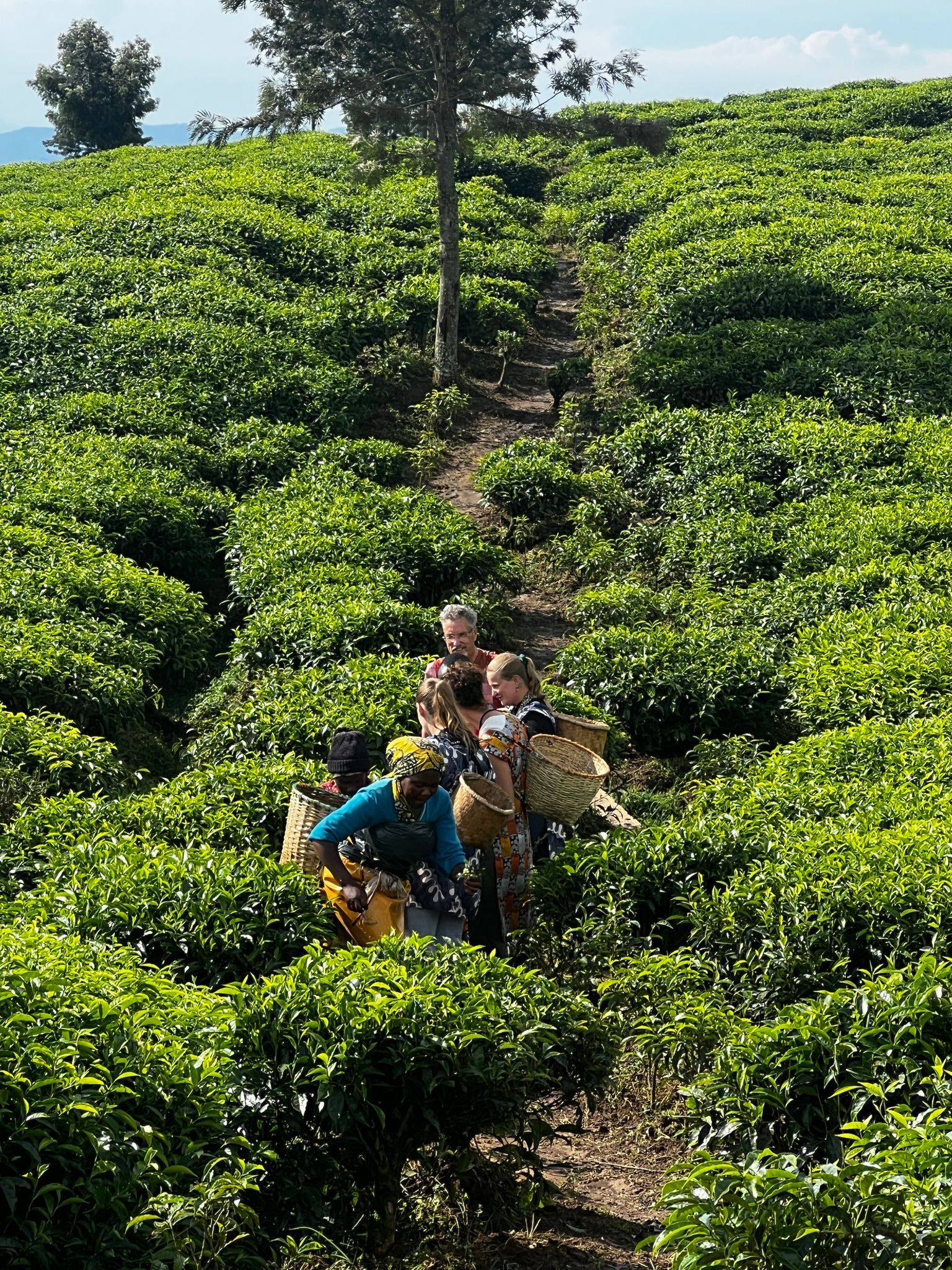
Visitors learn about tea harvesting at Gisakura, near Nyungwe National Park.
Can You See How the Tea Is Processed?
A tour of tea fields and a visit to a processing facility are not necessarily the same booking. Whether you can see processing depends on the estate’s visitor arrangements for your date. If that stage interests you, ask about it specifically before the itinerary is confirmed.
A consultant can tell you whether the available experience covers the fields, a tasting, a processing explanation or access to a facility. This distinction matters because “tea tour” can mean different things to different travellers and providers.
There is still plenty to learn if your visit remains outdoors. The fields, local guide and tasting can make a satisfying experience in their own right. Knowing the programme beforehand helps you arrive with the right expectations.
Is a Tea Plantation Visit Suitable for Children?
Visit Rwanda describes tea tours as suitable for travellers of all ages. A family can enjoy the scenery and learn where tea comes from without committing to a demanding forest hike. The visit may also offer a change of pace between wildlife activities.
The practical details still matter. Ask how much walking your chosen tour involves, whether paths are steep or slippery and how long children will be expected to stay with the group. A younger child may enjoy a shorter, more visual visit more than a lengthy explanation.
If you are travelling with children, tell your operator their ages and what they enjoy. Your consultant can check which available experience is likely to work best and schedule enough time for breaks.
How Much Walking Is Involved?
The amount of walking depends on the particular tour you book. Tea fields follow the contours of hills, so do not assume the paths are completely level. Ask your operator about the route, approximate time on foot and whether the planned visit can be adapted to your comfort.
Wear footwear you would be comfortable using on outdoor paths. Conditions can change with rain, and a scenic field visit is more enjoyable when you are prepared for uneven or damp ground. If you have mobility concerns, mention them before the booking is made.
A traveller who prefers minimal walking may still enjoy tea scenery from an appropriate viewpoint or a shorter arranged experience, depending on what is available. The important step is to describe your needs so your consultant can check the actual options.
Can You Combine Tea With Chimpanzee Trekking?
You can ask to include both activities in a Nyungwe trip, but give the chimpanzee trek priority when building the day. It usually requires an early start, and the time spent in the forest can vary. Avoid planning a tea tour at a fixed time immediately afterward unless your operator confirms the schedule is realistic.
One approach is to reserve the afternoon for a plantation visit only when there is sufficient time between activities. Another is to place tea on the arrival day or a separate day. Your hotel location and the estate’s tour availability will influence which plan works.
Wagatil Safaris includes a chimpanzee trek and tea plantation visit in its six-day Rwanda primates safari. Use that as an itinerary example, then request timings and availability for your own travel dates.
Can You Combine Tea With the Nyungwe Canopy Walk?
A tea visit and the canopy walk can be planned within the same wider Nyungwe stay. Whether they fit on the same day depends on your starting point, booked activity times, travel between them and the length of your plantation tour.
Treat the canopy walk as a separately arranged park activity. A booking for the walk does not automatically include a tea tour, and a tea tour does not automatically include park activities. Ask your consultant to list each experience clearly in your itinerary and quotation.
If you want time to photograph the fields and enjoy a tasting, avoid treating tea as a five-minute stop between fixed bookings. A relaxed schedule gives each experience room to be enjoyable.
Is a Tea Plantation Visit Inside Nyungwe National Park?
The tea estates sit near the forest and along its fringes. A plantation tour and a guided activity inside Nyungwe National Park are distinct experiences. Confirm where each activity begins and what entrance or activity arrangements apply to your itinerary.
This distinction is helpful when comparing prices. Your park activities, such as a guided forest experience, may have different booking requirements from a tea visit. Ask your operator for a quotation that identifies the experiences you have requested.
You can use Wagatil Safaris’ Nyungwe Forest National Park guide to explore the forest activities you might combine with tea. Choosing the activities first will help you decide how many nights to spend in the region.
When Is the Best Time of Day for a Visit?
The best time is the one that fits a confirmed estate tour and leaves room for your other plans. An unhurried visit is preferable to arriving late after a forest activity or trying to leave before a tasting is finished.
Photographers may enjoy soft light over the hills, but do not build your schedule around a preferred light condition without checking tour times. Access to an estate and its visitor activities comes first. Your guide can advise where a scenic stop may fit along the route.
If chimpanzee trekking is on the same day, ask your consultant for a realistic order of activities. The trek may finish later than expected, while a scheduled plantation visit may have a set meeting time.
What Should You Wear to a Tea Plantation?
Choose comfortable clothes and shoes suitable for outdoor walking. A light rain layer can be useful in the Nyungwe region, even if you are spending much of your time outside the forest. Carry water and protect your camera or phone if rain is possible.
If your tour includes a field walk, ask whether you will be on established paths and how much walking to expect. This is more useful than packing for a demanding hike when you have booked a short visit.
Keep your plans for the rest of the day in mind. If you are going from the plantation to a forest activity or a long transfer, bring what you will need in the safari vehicle rather than assuming you can return to your hotel first.
Can You Take Photographs at the Estate?
Tea fields are appealing subjects for landscape photographs, particularly where the planted hills meet the forest. A guided visit gives you time to find viewpoints and learn what you are seeing instead of taking a hurried picture from the road.
Ask your host before photographing workers closely or taking pictures inside any facility. Your guide can tell you what is appropriate and where visitors are allowed to stand. This keeps the experience comfortable for the people whose workplace you are visiting.
If the photograph is for a business website, keep your caption accurate. An image of Gisakura should not be labelled Gisovu, and a general tea-field viewpoint should not be described as a guided tour you took unless that is what it shows.
Where Can You Stay for a Tea Plantation Visit?
Your hotel choice should support the wider Nyungwe itinerary as well as the tea tour. Consider where your booked forest activities begin, how early you need to depart and how you will travel to the estate. Your consultant can compare these details when suggesting accommodation.
Visit Rwanda notes that Gisakura has guesthouses a short walk or drive from the estate, while Gisovu offers accommodation at the estate. It also lists accommodation around Nyungwe for travellers looking at different comfort levels.
One&Only Nyungwe House is another option in the region; Visit Rwanda describes it as set in a tea plantation on the edge of the park. Staying amid tea fields can be attractive, but a hotel stay does not automatically include a guided estate tour. Check the activities included in any booking.
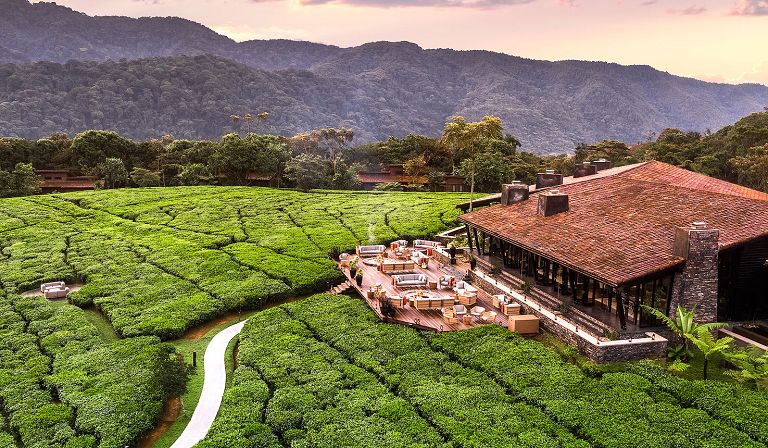
Accommodation overlooking tea fields near Nyungwe National Park.
Can You Add a Tea Visit on a Kigali-to-Nyungwe Journey?
Possibly, if your arrival time, route and the estate’s available tour time allow it. A transfer day already involves travel, so the tea experience should be planned as an activity rather than assumed to fit into whatever time remains.
Tell your consultant your departure point, expected start time and hotel. They can check whether visiting a plantation on arrival is practical or whether a later day would be better. This is especially important if you have a park activity early the next morning.
A short scenic stop may be easier to fit into a transfer than a guided tour. If the full tea experience is important to you, protect enough time for it in the itinerary and request confirmation before your travel day.
How Many Days Should You Allow for Nyungwe and Tea?
The answer depends on how many forest experiences you want. A traveller focused on one activity and a tea visit may need less time than someone planning chimpanzee trekking, the canopy walk, another guided forest activity and a relaxed afternoon at an estate.
For a trip built around Nyungwe, avoid treating the tea visit as an afterthought once every other hour is filled. It works best when you can walk, ask questions, taste tea if offered and take in the landscape without worrying about missing the next booking.
If you are planning a wider Rwanda journey, ask your consultant to show you the daily schedule, not just a list of destinations. Wagatil Safaris’ Rwanda wildlife safari guide can help you consider how Nyungwe fits alongside other parts of the country.
What Should Your Safari Quotation Say?
Your quotation should name the tea experience if you have requested one. Check whether it includes an organised estate visit or only time to see tea fields during a drive. Those are different experiences and may have different costs.
Ask which estate is planned, whether a guide and tasting are included, and whether transport to and from the visit is covered. If you want to learn about processing or try picking tea, request confirmation that the available tour includes those activities.
You should also check whether the plantation visit is scheduled on a day with another demanding activity. A thoughtful quotation gives you a workable order, enough time between bookings and a clear picture of what you are paying for.
A Sample Nyungwe Itinerary With a Tea Visit
Day 1: Travel to the Nyungwe region. Settle into your accommodation and enjoy the surrounding scenery. If an estate visit has been confirmed for your arrival time, take your guided tea tour and tasting before returning to your hotel. If travel takes longer than planned, a separate tea day may be more comfortable.
Day 2: Chimpanzee trekking and a flexible afternoon. Begin with your booked forest activity. Afterward, rest or take another experience only if the timing has been confirmed. A tea visit can be an appealing afternoon choice, but the day should not depend on the trek finishing at an exact hour.
Day 3: Another Nyungwe activity and onward travel. Depending on your interests and bookings, explore more of the forest or begin the next stage of your Rwanda safari. If tea was not practical on the first two days, ask whether a confirmed visit fits before departure.
This is an example, not a fixed tour schedule. The right order depends on your accommodation, confirmed park bookings, estate availability and travel route. Ask for a personalised itinerary before reserving activities independently.
Frequently Asked Questions
Can you visit a tea plantation near Nyungwe?
Yes. Gisakura and Gisovu are two established tea destinations around Nyungwe National Park. Arrange a tour in advance through a tour operator or Visit Rwanda so that your visit, guide and any tasting are confirmed.
Which plantation is closest to my Nyungwe hotel?
That depends on where you are staying. Gisakura is on the western side of the forest, while Gisovu is at its northern edge. Send your hotel name to your tour operator and ask which visit fits your route best.
Can I visit Gisakura Tea Estate without booking?
Do not rely on an unarranged arrival for a guided tour. Visit Rwanda advises visitors to organise plantation experiences through a tour operator or Visit Rwanda. A confirmed booking also tells you what activities are included.
Can I pick tea during the visit?
Ask before booking. A field tour may explain harvesting, but hands-on participation should be confirmed for your particular experience. Follow your host’s instructions in working areas.
Does a tea tour include a factory visit?
Not automatically. A walk through tea fields, a tasting and access to processing facilities can be separate parts of an experience. Tell your operator if seeing processing is a priority.
Is the tea visit part of my Nyungwe park booking?
Treat the plantation visit as a separate experience unless your quotation specifically includes it. Check both your park activities and tea tour against the final itinerary.
Is the visit worth doing if I do not drink much tea?
Yes, if the landscape and agricultural story interest you. The visit can add variety to a forest-focused trip through scenery, a guided conversation and a closer look at how the region’s tea is grown.
Conclusion
You can visit a tea plantation near Nyungwe, with Gisakura and Gisovu offering two distinct possibilities. Gisakura is on the forest’s western fringe; Gisovu lies near its northern edge. Both can add a memorable cultural and landscape experience to a trip centred on Nyungwe’s rainforest.
Choose the estate that suits your route, decide whether you want a guided field visit, tasting or another specific activity, and arrange it before you travel. With a confirmed booking and a realistic schedule, a tea visit becomes a meaningful part of your Nyungwe safari.


