Uganda Gorilla Rafting Safari: Complete Adventure Guide

Uganda Gorilla Trekking from Switzerland: Complete 2027 Travel Guide
October 6, 2026
Uganda Gorilla and Shoebill Safari: Complete 2027 Travel Guide
October 8, 2026

Uganda Gorilla Rafting Safari
Uganda Gorilla Rafting Safari combines two completely different adventures in one journey: mountain gorilla trekking in the forests of Bwindi or Mgahinga and white-water rafting on the River Nile near Jinja. It is an excellent choice for travellers who want more than traditional game drives and prefer a Uganda holiday that includes wildlife, physical adventure, changing landscapes and memorable outdoor experiences.
The combination works because the two activities offer completely different environments. Jinja delivers fast-moving river adventure, while southwestern Uganda provides cool mountain forests and close encounters with endangered mountain gorillas. With enough time, travellers can also add chimpanzee tracking, Queen Elizabeth National Park, boat safaris and other wildlife experiences between Jinja and Bwindi.
Travellers preparing for the gorilla section can first explore Wagatil Safaris’ Gorilla Trekking Safaris in Uganda, while visitors interested in additional wildlife can use the Uganda Wildlife Safaris guide when designing the wider route.
Why Choose a Uganda Gorilla Rafting Safari?
A Uganda Gorilla Rafting Safari is especially suitable for travellers who enjoy active holidays. Instead of spending every day inside a safari vehicle, visitors experience the country from the river, on foot in tropical forest and, when wildlife parks are added, during traditional game drives and boat excursions.
The Nile rafting experience around Jinja brings an energetic start to the holiday. Current operators such as Adrift offer several rafting styles, including milder Grade 3 experiences and more demanding Grade 5 rafting. This allows travellers to select a river experience according to confidence, age and preferred adventure level.
Gorilla trekking provides the opposite atmosphere. Uganda Wildlife Authority confirms that organised gorilla trekking takes place in Bwindi Impenetrable National Park and Mgahinga Gorilla National Park. Treks generally require moderate fitness and can last approximately two to seven hours, followed by one regulated hour observing a habituated gorilla family once it is located.
Combining both experiences creates a safari that feels varied rather than repetitive. The journey may begin with rapids and river scenery before moving through Uganda’s countryside towards savannah wildlife areas and eventually the misty forests where mountain gorillas live.
Where Does White-Water Rafting Take Place in Uganda?
Jinja is Uganda’s best-known adventure centre and the main base for travellers planning white-water rafting on the Nile. The wider river area offers rafting, kayaking and other adventure activities, making Jinja a natural place to spend one or two nights at the beginning or end of a longer Uganda safari.
Current Grade 3 rafting offered by Adrift lasts around four to five hours and is designed as the milder option. Guests can participate in a paddle team or use a professionally guided safety raft. The operator provides helmets, high-flotation life jackets, specialist rafting equipment, safety kayakers and drinking water during the activity.
Travellers wanting more intensity can consider Grade 5 rafting. Adrift currently lists this as a four-to-five-hour activity for participants aged 16 and above, involving more challenging rapids and experienced river crews. Those who do not want such a demanding experience can choose the gentler Grade 3 alternative instead.
Families are not automatically excluded from Jinja. Adrift also publishes a family rafting option lasting around three hours, with a stated minimum age of five and the route adjusted around the needs of younger participants. This creates possibilities for families who cannot all take part in the more demanding rafting products.

White Water rafting at the Nile in Uganda
Where Does Gorilla Trekking Take Place?
The gorilla part of a Uganda Gorilla Rafting Safari takes place in southwestern Uganda.
Bwindi Impenetrable National Park is divided into four principal trekking sectors: Buhoma, Ruhija, Rushaga and Nkuringo. The selected sector matters because accommodation should normally be booked close to the briefing point associated with the confirmed permit.
Mgahinga Gorilla National Park provides another option in the Virunga Mountains. Its smaller scale, volcanic scenery and proximity to Kisoro make it particularly appealing to travellers who also want golden monkey tracking or additional activities around Lake Mutanda and the Kisoro highlands.
Neither park should be selected purely by name. Permit availability, accommodation preferences, the direction of the safari and the destinations visited before or after the trek should determine which gorilla area works best.
Travellers comparing Uganda’s gorilla experiences can also read Wagatil Safaris’ Mountain Gorillas in Uganda and Mountain Gorilla Trekking in Africa guides.
Uganda Gorilla Rafting Safari: Which Activity Should Come First?
For many travellers, rafting in Jinja first and gorilla trekking later produces the most natural route.
After arriving at Entebbe International Airport, visitors can travel east towards Jinja, spend a night near the Nile and complete the rafting activity the following day. From there, the journey turns west towards Uganda’s major wildlife and primate destinations.
This order also places the faster-paced adventure at the beginning of the safari. Travellers then move gradually towards wildlife viewing, forest activities and the gorilla trek, allowing the journey to become calmer as it progresses.
The reverse arrangement can also work. Travellers who prefer to end close to Entebbe may complete the western Uganda safari first, return towards central Uganda and spend the final night or two in Jinja before departure.
The best order depends on international flight times, safari duration and the number of destinations included between Jinja and Bwindi.
How Many Days Do You Need?
A Uganda Gorilla Rafting Safari should ideally have enough time to prevent long road journeys from dominating the holiday.
A six or seven-day itinerary can combine Jinja and Bwindi, but travellers should expect substantial travel between eastern and southwestern Uganda.
Eight or nine days allows Queen Elizabeth National Park to be added between Jinja and Bwindi. This improves the overall safari because visitors can enjoy game drives and a Kazinga Channel boat safari instead of spending several consecutive days primarily transferring between destinations.
Ten to twelve days creates even more flexibility. Kibale National Park can be added for chimpanzee tracking before Queen Elizabeth and Bwindi, creating a route involving river adventure, chimpanzees, savannah wildlife and mountain gorillas.
For inspiration on the western Uganda portion, Wagatil Safaris’ 7 Days Chimps, Gorillas & Wildlife Uganda Safari links Kibale, Queen Elizabeth, Bwindi and Lake Mburo in a practical circuit.
Suggested 7-Day Uganda Gorilla Rafting Safari
A seven-day version is best for travellers who want rafting and gorillas to remain the main priorities.
Day 1: Arrive at Entebbe International Airport and travel towards Jinja, depending on arrival time.
Day 2: Complete white-water rafting on the Nile and overnight around Jinja.
Day 3: Begin the journey towards western or southwestern Uganda.
Day 4: Continue towards Bwindi and check into accommodation close to the confirmed trekking sector.
Day 5: Complete the mountain gorilla trekking experience.
Day 6: Begin the return journey towards Entebbe, with an overnight stop according to the route.
Day 7: Continue to Entebbe for the international departure.
This itinerary is possible, but it is relatively fast-paced. Travellers who dislike long transfers should add at least one or two additional days.
Suggested 9-Day Uganda Gorilla Rafting and Wildlife Safari
Nine days creates a more balanced safari because Queen Elizabeth National Park can be added.
Day 1: Arrive in Entebbe.
Day 2: Transfer to Jinja and enjoy the Nile area.
Day 3: Complete the rafting experience.
Day 4: Travel towards western Uganda.
Day 5: Continue to Queen Elizabeth National Park and enjoy an afternoon or evening wildlife activity where timing allows.
Day 6: Complete a morning game drive and afternoon Kazinga Channel boat safari.
Day 7: Transfer towards Bwindi Impenetrable National Park.
Day 8: Gorilla trekking.
Day 9: Begin the journey back towards Entebbe or use a domestic flight if the itinerary and trekking sector allow.
Travellers adding Queen Elizabeth can use Wagatil Safaris’ Queen Elizabeth National Park Safari guide to compare game drives, Kazinga Channel activities and different safari areas.
Can You Add Chimpanzee Trekking?
Yes. A longer Uganda Gorilla Rafting Safari can include chimpanzee trekking without changing the core adventure concept.
Kibale National Park fits logically between Jinja and Queen Elizabeth National Park. Travellers can complete the rafting adventure first, continue west towards Kibale for chimpanzees, then move through Queen Elizabeth before finishing with mountain gorillas in Bwindi.
This gives the safari four distinctive experiences: Nile rafting, chimpanzee trekking, traditional savannah wildlife and mountain gorillas.
For travellers already making a long international journey, this route can provide better overall value than travelling all the way to Uganda for only two activities.
Wagatil Safaris’ existing 7 Days Gorilla, Chimpanzee and Wildlife Safari demonstrates how the primate and wildlife section can be organised before Jinja is added to the itinerary.

A chimpanzee photographed in the tropical forest of Kibale National Park.
How Difficult Is White-Water Rafting?
Rafting difficulty depends heavily on the product chosen.
Adrift’s current Grade 3 rafting is described as the milder Nile experience. It lasts approximately four to five hours and allows guests either to paddle as part of a team or choose a softer professionally rowed option.
Grade 5 rafting is more demanding. It includes stronger rapids and currently has a minimum age of 16. Travellers should therefore choose according to confidence and physical comfort rather than feeling that the most difficult option automatically provides the best experience.
Previous rafting experience is not necessarily required for standard commercial trips, but participants must pay attention to the safety briefing and follow instructions from the river crew.
Travellers with medical conditions or concerns about strenuous water activities should discuss their suitability with an appropriate medical professional and the rafting operator before booking.
How Difficult Is Gorilla Trekking?
Gorilla trekking requires a different type of fitness.
Instead of intense periods on a river, visitors may walk for several hours through steep, muddy or uneven forest terrain. Uganda Wildlife Authority notes that treks can take roughly two to seven hours depending on the movement and location of the gorillas.
The unpredictability is part of the experience. One group may locate its gorilla family relatively quickly, while another may need to trek much farther.
Strong footwear, suitable clothing and realistic expectations make the activity more comfortable. Visitors can also hire porters to help carry daypacks, camera equipment and other personal items.
The combination of rafting and trekking therefore works best for travellers comfortable with an active holiday, although neither experience requires visitors to be elite athletes.
What Should You Pack for a Uganda Gorilla Rafting Safari?
Packing needs to cover both river conditions and forest trekking.
For rafting, lightweight quick-drying clothing is useful. Adrift recommends bringing a towel and change of clothes for after the activity, while specialist safety equipment such as helmets and life jackets is provided by the operator.
For gorilla trekking, visitors should pack sturdy hiking boots, long trousers, a lightweight waterproof jacket and long socks or gaiters. Gardening-style gloves can also be useful when holding vegetation for balance on steeper sections.
A small daypack can carry drinking water, rain protection, camera equipment and a packed lunch.
Travellers using domestic safari flights should also check luggage restrictions before packing large suitcases. Soft-sided luggage can be easier to handle on smaller aircraft.
What Is the Best Time for a Uganda Gorilla Rafting Safari?
Both activities are available across much of the year, although weather conditions can influence comfort.
Gorilla trekking operates year-round, but the relatively drier periods are popular because forest trails may be less muddy. Even during drier months, visitors should expect the possibility of rain in Bwindi and Mgahinga.
Rafting operators also work across the year. Adrift states that its Grade 3 trips operate in different weather conditions and provides specialist safety equipment for participants.
Travellers including Queen Elizabeth or Kibale should therefore select travel dates according to the complete itinerary rather than concentrating only on rafting or gorilla trekking.
The best period is ultimately the one that matches available travel dates, permit availability, accommodation and the visitor’s tolerance for wetter trail conditions.
Gorilla Permit Costs and Safari Budgeting
A major cost in a Uganda Gorilla Rafting Safari is the gorilla permit.
For 2027 planning, Wagatil Safaris’ current cost guide lists the standard foreign non-resident gorilla trekking permit at USD 800 per person. The guide also notes the published foreign non-resident low-season rate of USD 600 during April, May and November under applicable conditions.
The permit is only one part of the safari budget. Accommodation, vehicle transport, driver-guide services, fuel, rafting, meals and additional park activities all affect the final cost.
For two travellers sharing, Wagatil’s current planning figures place a seven-day gorilla, chimpanzee and wildlife safari broadly around USD 2,700–4,300+ per person, depending on accommodation, permits, transport and other choices. These are planning ranges rather than fixed quotations.
Travellers can review the complete Uganda Safari Cost 2027 guide when building a realistic budget.
Is a Private Safari Vehicle the Best Option?
For most travellers combining Jinja with Bwindi and other national parks, a private safari vehicle is practical.
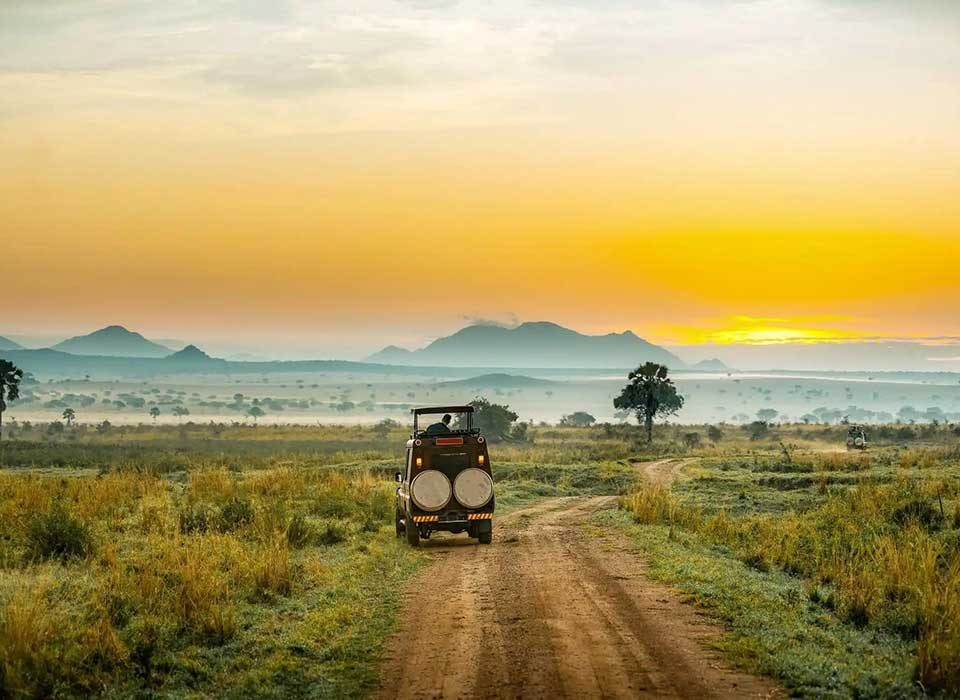
A driver-guide can collect guests from Entebbe, connect them with Jinja and then continue through western Uganda without requiring repeated transport bookings.
Private travel also gives visitors greater flexibility with rest stops, photography and daily departures.
Travellers using a domestic flight for the gorilla section can combine road and air transport. For example, Jinja and central Uganda may be explored by vehicle before a flight reduces the longer southwestern transfer.
The correct option depends on trip length. Road travel generally suits longer itineraries, while domestic flights can be particularly valuable during short holidays.
Can Families Book a Uganda Gorilla Rafting Safari?
Families need to consider the age limits of both activities.
Adrift currently offers a dedicated family rafting experience for children from age five, while Grade 3 and Grade 5 products have different age and safety conditions.
Gorilla trekking has separate wildlife-authority rules, so parents should confirm current minimum-age requirements before planning the entire journey around family participation.
When some children are too young for gorilla trekking, alternative activities may be organised while eligible family members complete the trek.
The safari should therefore be designed around the youngest traveller rather than assuming every family member can participate in every activity.
Do Travellers Need a Uganda Visa?
Visa requirements depend on nationality, but travellers who require a Uganda visa must use the official online system.
Uganda Immigration states that its single-entry tourist visa is available online and requires documents including a passport biodata page with at least six months’ validity, a tour plan, travel itinerary or booking, recent passport photograph and accommodation information.
Visa-prone travellers should obtain the required travel authorisation before travelling because Uganda’s immigration authority states that visas are not issued on arrival under the online application system.
Travellers should use the official Uganda Immigration tourist visa information rather than unofficial visa websites.
Those combining Uganda with Kenya and Rwanda should also check whether an East African Tourist Visa is more suitable for their itinerary.
Is Travel Insurance Important?
Travel insurance is particularly important because the itinerary combines an active water sport with trekking in a remote mountain environment.
Travellers should check whether the policy specifically covers white-water rafting at the intended grade rather than assuming all adventure activities are automatically included.
Medical treatment, emergency evacuation, trip cancellation and interruption should also be reviewed carefully.
Rafting packages do not necessarily include personal travel insurance. Adrift currently lists travel insurance as excluded from its rafting products, making personal coverage the traveller’s responsibility.
Visitors should also declare any relevant pre-existing conditions according to their insurer’s requirements.
Who Is a Uganda Gorilla Rafting Safari Best For?
This journey is particularly attractive to travellers who enjoy variety.
Adventure travellers get the energy of the Nile without sacrificing one of Africa’s most important wildlife encounters.
Couples can combine rafting and gorillas with comfortable lodges and scenic stops to create a more active honeymoon or special-interest safari.
Solo travellers can also enjoy the itinerary because rafting is naturally social, while a private safari arrangement can preserve flexibility between destinations.
Photographers gain several different visual environments, including the Nile, Uganda’s countryside, savannah wildlife and forest primates.
Travellers who prefer slow-paced holidays can still enjoy the combination by adding extra nights rather than trying to fit both headline activities into a very short itinerary.
Is a Uganda Gorilla Rafting Safari Worth It?
A Uganda Gorilla Rafting Safari is particularly worthwhile for visitors who want an itinerary that feels different from a conventional wildlife safari.
The rafting experience provides adrenaline, teamwork and river scenery, while gorilla trekking offers a slower and more intimate wildlife encounter.
Adding Queen Elizabeth National Park or Kibale further increases the contrast between different days without requiring multiple international border crossings.
The main mistake is trying to complete too much too quickly. A rushed itinerary can turn the journey into a series of long road transfers.
For most travellers, around eight to ten days provides a stronger balance between rafting, wildlife, gorillas and travel time.
Final Thoughts on a Uganda Gorilla Rafting Safari
Uganda Gorilla Rafting Safari planning works best when the gorilla permit and rafting activity are treated as the two fixed highlights of the trip, with the rest of the route organised logically between them.
Travellers can begin in Jinja before heading west, or place rafting near the end of the safari according to international flight schedules. Queen Elizabeth National Park, Kibale and Lake Mburo can be added when enough days are available.
The strongest itinerary does not necessarily contain the highest number of destinations. It gives travellers enough time to enjoy the Nile, recover between active experiences and approach gorilla trekking without unnecessary rushing.
By combining white-water rafting near Jinja with mountain gorilla trekking in Bwindi or Mgahinga, a Uganda Gorilla Rafting Safari creates an unusually varied East African adventure filled with river excitement, rainforest trekking, wildlife and some of Uganda’s most memorable landscapes.