
Uganda Is Ebola-Free in 2026: 11 Reassuring Safari Travel Facts

What Happens If Your Safari Vehicle Breaks Down in a Uganda National Park? 11 Essential Safety Facts
September 24, 2026
Should You Stay in Entebbe on Your First Night in Uganda or Start Your Safari Immediately?
September 26, 2026
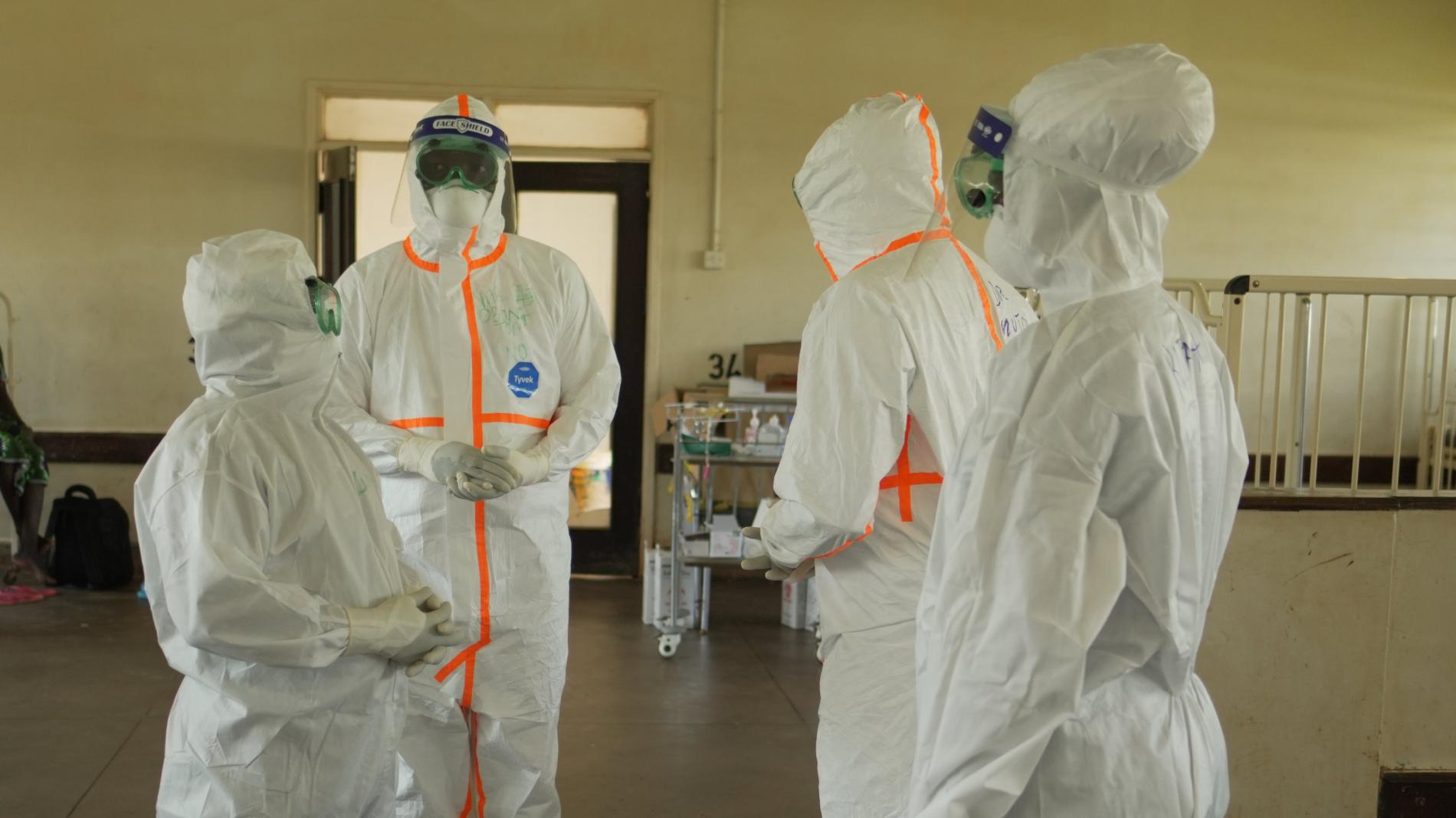
Uganda is Ebola-free in 2026
Uganda is Ebola-free in 2026, following the official announcement made by the Uganda Ministry of Health on 28 July 2026.
This declaration is reassuring news for international visitors planning gorilla trekking, wildlife safaris, chimpanzee tracking, birdwatching, cultural tours and other holidays across the Pearl of Africa.
The announcement followed Uganda’s successful response to an outbreak of Ebola disease caused by Bundibugyo virus.
Ugandan health authorities worked with the World Health Organization and other partners to identify infections, monitor contacts, provide medical care and strengthen surveillance.
The last known patient recovered and was discharged after receiving two negative test results. Uganda subsequently announced that the outbreak within the country had ended.
However, Ebola-free describes Uganda’s officially declared health status at a particular time. It does not mean that Uganda or another country can never experience a future imported infection or outbreak.
Health situations can change. Travellers should therefore check current information from the Uganda Ministry of Health, the official Uganda Ebola information platform and the World Health Organization before travelling.
This guide explains what Uganda’s Ebola-free declaration means for tourists, national parks, gorilla trekking and future safari planning.
1. Uganda Is Ebola-Free in 2026 Following an Official Declaration
Uganda’s Ministry of Health officially announced that the country was Ebola-free on 28 July 2026.
The declaration followed Uganda’s response to an outbreak involving Bundibugyo virus. The Ugandan outbreak was declared on 15 May 2026.
Official reports connected the cases recorded in Uganda to transmission originating in the neighbouring Democratic Republic of the Congo.
Uganda recorded imported infections and limited secondary transmission among people who had come into contact with confirmed patients.
The Ministry of Health worked with the World Health Organization and other partners to respond to the outbreak.
Health teams investigated alerts, tested suspected cases, monitored contacts and treated confirmed patients.
The last known patient was discharged from treatment after receiving two negative test results. This marked an important step towards bringing the outbreak within Uganda to an end.
The official declaration means travellers should no longer rely on earlier articles that described Uganda as experiencing an active outbreak.
News reports published during May, June or early July 2026 may have been accurate when written. However, those reports do not necessarily describe Uganda’s current health status.
Visitors should always check the publication date of a health article before using it to make a travel decision.
2. What Does Uganda’s Ebola-Free Declaration Mean?
An Ebola-free declaration means that health authorities have determined that the outbreak within the country has ended under the applicable public-health assessment process.
It does not mean that Uganda immediately stops monitoring possible infections.
Health authorities continue investigating alerts, testing suspected cases and maintaining preparedness at hospitals, airports and important border crossings.
Continued surveillance is particularly important while an outbreak remains active in another country within the region.
Population movement can create a possibility of imported infection. Uganda must therefore maintain systems that can detect and manage a suspected case quickly.
Travellers may still see public-health notices at Entebbe International Airport, hospitals, border posts or other public places.
The presence of these notices does not automatically indicate that Uganda has another active outbreak. They may be part of continued preparedness and public education.
Tourists should cooperate with any lawful health screening or documentation requirements operating on their arrival date.
The Ebola-free declaration is reassuring, but travellers should understand that it represents a dated public-health status rather than a permanent guarantee.
3. Why Uganda Is Ebola-Free in 2026 Matters for Tourism
Tourism depends on accurate information and traveller confidence.
News about an infectious disease can affect an entire country’s tourism industry, even when reported cases are geographically separated from the major visitor destinations.
Some travellers may cancel a safari after seeing an alarming headline without checking when the article was published.
Others may assume that every part of Uganda is affected because a report mentions the country without identifying the districts associated with confirmed cases.
The official Ebola-free declaration gives travellers a more accurate basis for making decisions.
It confirms that Uganda contained the outbreak and officially announced its end within the country.
This is positive news for people planning gorilla trekking safaris in Uganda, chimpanzee tracking, wildlife viewing and cultural experiences.
The declaration is also important for guides, lodge employees, drivers, porters, craft sellers and communities whose livelihoods benefit from responsible tourism.
Nevertheless, safari companies should not use the declaration as a promise that travel is completely free from every health or safety concern.
Responsible communication should clearly mention the declaration date and encourage visitors to consult current official sources.
4. Uganda’s National Parks Were Not Identified as Outbreak Centres
The Ugandan cases officially reported during the 2026 outbreak were associated with Kampala and Wakiso.
Uganda’s principal national parks were not identified as outbreak centres in the official information reviewed for this article.
This distinction is important because Uganda’s most popular safari routes extend across several regions.
Bwindi Impenetrable National Park is situated in southwestern Uganda. It is internationally known for mountain gorilla trekking.

Mountain Gorilla In Bwindi Impenetrable Forest
Queen Elizabeth National Park offers game drives, crater landscapes, the Kazinga Channel and opportunities to search for tree-climbing lions in Ishasha.

Elephants in Queen Elizabeth National Park feeding on Kazinga Channel
Murchison Falls National Park lies in northwestern Uganda. Visitors travel there for game drives, Nile boat cruises and views of Murchison Falls.
Kibale National Park is Uganda’s leading chimpanzee-tracking destination and protects an exceptional variety of primates.
Lake Mburo National Park offers game drives, boat trips and guided activities within a compact savannah environment.
Mgahinga Gorilla National Park is known for mountain gorillas, golden monkeys and volcanic scenery.
Although these destinations were not identified as outbreak centres, travellers should continue following national health guidance.
A safari includes airports, towns, roads, lodges and sometimes international borders. Responsible operators must therefore monitor the complete travel route.
5. How Is Ebola Transmitted?
Ebola is transmitted through direct contact with the blood or other bodily fluids of a person who is sick with or has died from Ebola.
Transmission may also occur through contact with materials contaminated by infected bodily fluids.
Ebola is not transmitted through the air in the same manner as common respiratory illnesses.
A tourist does not normally contract Ebola by watching wildlife from a safari vehicle, driving through a national park or sitting in a lodge restaurant.
Taking a photograph of an elephant, lion, giraffe, hippo or gorilla does not by itself create the type of direct exposure normally associated with Ebola transmission.
Travellers should still avoid direct contact with blood, bodily fluids and contaminated objects.
Visitors should never touch an animal that appears sick, injured or dead.
If an unusual animal is observed inside a national park, the traveller should remain at a safe distance and inform the driver-guide or Uganda Wildlife Authority ranger.
The ranger can report the observation to the relevant wildlife and veterinary authorities.
Travellers seeking medical information can consult the World Health Organization’s Ebola guidance.
6. Can Tourists Catch Ebola From Wildlife During a Safari?
Uganda’s wildlife should always be observed responsibly and from the distance recommended by a guide or ranger.
During a normal game drive, travellers remain inside a safari vehicle unless the guide confirms that leaving the vehicle is permitted.
This arrangement allows visitors to observe animals without interfering with their natural behaviour.
During walking safaris, tourists are accompanied by authorised guides or rangers who understand the area and its wildlife.
Visitors should follow every instruction concerning distance, movement and photography.
Tourists should not touch sick or dead animals, handle bushmeat or purchase products made from protected wildlife.
These precautions are important for public health, personal safety and wildlife conservation.
An ordinary wildlife sighting is not the same as direct contact with infected animal tissue or bodily fluids.
Travellers can therefore enjoy Uganda’s wildlife experiences while maintaining appropriate distance and following professional guidance.
7. Uganda Is Ebola-Free, but Gorilla Health Rules Remain Important
Uganda’s Ebola-free declaration does not remove the health regulations used during mountain gorilla trekking.
Mountain gorillas are genetically close to humans and can be vulnerable to human illnesses.
A traveller experiencing fever, diarrhoea, vomiting, a persistent cough or another potentially infectious condition should inform the safari operator before travelling to the trekking centre.
The Uganda Wildlife Authority and park rangers are responsible for protecting both visitors and gorillas.
A visibly unwell person may be prevented from joining a gorilla trek when participation could place the gorillas, guides or other travellers at risk.
Visitors should be honest about their health. Hiding symptoms could threaten an endangered gorilla family and expose other people to illness.
During the gorilla encounter, travellers must follow the ranger’s instructions regarding viewing distance, movement, food, coughing, photography and waste disposal.
Visitors should never attempt to touch a gorilla.
A gorilla may occasionally move closer than the recommended viewing distance. When this happens, visitors should remain calm and follow the ranger’s directions.
International tourists can prepare by reading Wagatil Safaris’ guide to gorilla trekking safaris in Uganda.
8. Why Uganda Continues Health Surveillance
Surveillance continues after an outbreak because early detection is essential.
Uganda’s health system must remain prepared to investigate a possible imported infection, particularly when disease transmission continues elsewhere in the region.
Hospitals and health workers may continue receiving guidance about recognising possible symptoms.
Laboratories may remain prepared to test samples from suspected cases.
Border and airport teams may continue sharing health information with travellers.
Communities may also be encouraged to report unusual illnesses through official channels.
These activities should reassure tourists rather than frighten them.
A strong surveillance system helps authorities investigate a concern before it becomes a larger public-health problem.
Travellers should not assume that continued screening means an outbreak is active.
Health screening, information posters and emergency-preparedness measures can remain in place after a country has been declared free from an outbreak.
9. Can International Tourists Visit Uganda in 2026?
International visitors can continue planning Uganda safaris following the country’s official Ebola-free declaration.
However, tourists should base their final travel decisions on several current sources.
The Uganda Ministry of Health provides national public-health information.
The World Health Organization publishes international outbreak updates and technical health information.
A traveller’s home government may publish additional advice concerning health, security, road conditions, demonstrations and border regions.
Airlines and transit countries may also introduce their own requirements.
Travel insurance providers may apply conditions depending on government advisories, medical history or the activities included in the itinerary.
Visitors should read the entire travel advisory rather than relying on a headline.
A government advisory may cover several different subjects that are unrelated to Ebola.
Travellers can also read Wagatil Safaris’ general guide explaining whether Uganda is safe to visit.
Because health and security conditions can change, every travel guide should display its publication or review date.
10. Does Uganda Require an Ebola Vaccine?
International travellers should not assume that an Ebola vaccine is a standard entry requirement for an ordinary Uganda safari.
Vaccine availability and medical recommendations may depend on the particular Ebola virus involved.
The 2026 Ugandan outbreak involved Bundibugyo virus.
Travellers should not follow vaccination advice written for a different Ebola virus without consulting a qualified medical professional.
A travel-health appointment should ideally take place several weeks before departure.
This gives the healthcare professional enough time to review the traveller’s vaccination history, destination and personal medical circumstances.
The consultation may cover yellow fever vaccination, routine immunisations, malaria prevention, food safety, water precautions and insect-bite prevention.
Uganda commonly requires eligible international visitors to provide a valid yellow fever vaccination certificate.
The requirements applying to a particular traveller can depend on age, nationality, medical circumstances, recent travel and the route used to enter Uganda.
Wagatil Safaris can provide general destination information, but individual medical advice must come from a doctor or recognised travel clinic.
11. How to Prepare for a Healthy Uganda Safari
Good safari preparation extends beyond Ebola.
Travellers should arrange comprehensive insurance that includes medical treatment, emergency evacuation and the activities planned during the safari.
Insurance conditions should be read carefully before payment.
Some policies contain exclusions relating to infectious diseases, government advisories, pre-existing medical conditions or travel to remote destinations.
Malaria is a more routine concern for many Uganda safari visitors than Ebola.
A healthcare professional can recommend suitable malaria-prevention medication based on the traveller’s health and itinerary.
Visitors should also use effective insect repellent and wear suitable clothing during periods of increased mosquito activity.
Prescribed medication should be carried in its original packaging.
Essential medicine should remain in hand luggage rather than checked baggage.
Travellers should carry enough medication for the entire journey, with an additional supply in case of unexpected delay.
Good hand hygiene remains important throughout the safari.
Hands should be washed with soap and clean water whenever possible.
Hand sanitiser can be useful during game drives, forest activities and other situations where washing facilities are not immediately available.
A traveller who develops a serious illness should seek professional medical assistance promptly.
The person should provide accurate information about symptoms, recent destinations and possible exposure.
What Should Travellers Expect at Entebbe International Airport?
Entebbe International Airport is Uganda’s principal international airport and the arrival point for most safari travellers.
Health procedures at the airport can change according to national and regional conditions.
Visitors should cooperate with any screening or documentation requirements operating on their arrival date.
A traveller should keep the passport, visa approval, yellow fever certificate and travel-insurance details accessible.
The safari itinerary, accommodation information and Wagatil Safaris contact details should also be available.
Visitors should confirm entry conditions with official authorities and the airline shortly before departure.
A blog article can provide useful planning information, but it cannot guarantee that airport procedures will remain unchanged.

Entebbe international Aiport
What Should You Do If You Find an Alarming Ebola Report?
Begin by checking when the report was published.
An old report may reappear online long after the situation described in it has changed.
Next, identify the source.
Information published by Uganda’s Ministry of Health or the World Health Organization carries greater authority than an anonymous social-media account.
Confirm whether the report concerns Uganda or another country.
A regional outbreak does not automatically mean every East African country has an active outbreak.
Check the geographical location mentioned in the report.
A case recorded in one district should not automatically be described as though every national park and tourism destination is affected.
Contact the safari operator if the report could influence an existing booking.
The traveller should also consult the insurer and a medical professional when appropriate.
Avoid forwarding unverified information.
False health claims can create unnecessary fear and damage communities whose livelihoods depend on tourism.
Is It Safe to Combine Uganda With Other East African Countries?
Many travellers combine Uganda with Rwanda, Kenya or Tanzania.
A multi-country holiday may include gorilla trekking in Uganda, a wildlife safari in Tanzania and beach relaxation in Zanzibar.
Uganda’s Ebola-free declaration applies to Uganda.
Every additional country has its own health conditions, immigration regulations and entry requirements.
Travellers should check information for each destination included in the itinerary.
They should also review the rules of any country used only for an airport connection.
Yellow fever requirements may depend on the traveller’s route and recent travel history.
Insurance should remain valid across every country visited.
A multi-country itinerary should include enough time for immigration, border formalities and possible operational changes.
Why Visit Uganda After the Ebola-Free Declaration?
Uganda offers one of Africa’s most varied safari experiences.
Travellers can encounter mountain gorillas, chimpanzees, lions, elephants, giraffes, buffaloes, hippos and numerous bird species during one carefully planned journey.
Bwindi and Mgahinga offer mountain gorilla trekking.
Kibale is renowned for chimpanzee tracking and other primates.
Queen Elizabeth National Park combines savannah wildlife, crater scenery and the Kazinga Channel.
Murchison Falls National Park brings together game drives, Nile wildlife and one of Uganda’s most powerful natural attractions.
Lake Mburo offers a quieter safari environment within convenient travelling distance of Kampala and Entebbe.
Longer journeys may also include Ziwa Rhino Sanctuary, Lake Bunyonyi, Jinja and cultural experiences.
Visitors can explore Wagatil Safaris’ guide to wildlife safaris in Uganda when comparing destinations.
Travellers who are uncertain about the ideal holiday length can read how many days are needed for a Uganda safari.
Why Book With a Responsible Local Safari Operator?
A local safari operator coordinates transport, accommodation, permits and activities.
The operator also communicates with guides, lodges and activity providers when conditions change.
Responsible safari companies should share information from credible official sources.
They should avoid hiding confirmed concerns or exaggerating unverified reports.
Health information should always include the publication or declaration date.
A dated status should not be presented as a permanent medical guarantee.
Travellers should also be reminded that a safari operator cannot replace a doctor, insurer or public-health authority.
Booking directly can simplify communication before and during the journey.
Learn more about why travellers book directly with Wagatil Safaris.
Frequently Asked Questions About Uganda’s Ebola-Free Status
Is Uganda Ebola-Free in 2026?
Yes. Uganda’s Ministry of Health announced on 28 July 2026 that the country was officially Ebola-free.
Travellers should still check current official information because public-health conditions can change.
When Was Uganda Declared Ebola-Free?
Uganda was officially declared Ebola-free on 28 July 2026.
The declaration followed the country’s response to an outbreak involving Bundibugyo virus.
Can International Tourists Visit Uganda?
International visitors can plan Uganda safaris while checking current Ministry of Health information, entry requirements, government travel advisories and insurance conditions.
Were Uganda’s National Parks Affected?
Uganda’s principal national parks were not identified as outbreak centres in the official reporting reviewed for this article.
The Ugandan cases were associated with Kampala and Wakiso.
Can Tourists Catch Ebola During a Game Drive?
An ordinary game drive does not involve the type of direct contact normally associated with Ebola transmission.
Travellers should avoid touching sick or dead animals and follow every instruction given by their guide.
Is Ebola Transmitted Through the Air?
Ebola is not transmitted through the air in the same way as common respiratory illnesses.
Transmission generally requires direct contact with infected bodily fluids or contaminated materials.
Do Tourists Need an Ebola Vaccine?
Visitors should not assume that Ebola vaccination is a routine tourist-entry requirement for Uganda.
Personal medical guidance should be obtained from a qualified healthcare professional.
Is Gorilla Trekking Operating in Uganda?
Gorilla trekking continues under Uganda Wildlife Authority regulations and permit availability.
Visitors must follow health and conservation rules designed to protect the mountain gorillas.
Should Travellers Cancel Because of an Old Ebola Article?
Travellers should not cancel a safari based entirely on an old or undated report.
The information should be compared with current Uganda Ministry of Health updates, WHO information and government travel advice.
Can Wagatil Safaris Provide Medical Advice?
Wagatil Safaris can share practical travel information and links to official sources.
Medical decisions should be discussed with a doctor or recognised travel-health professional.
Final Thoughts: Uganda Is Ebola-Free in 2026
Uganda is Ebola-free in 2026, according to the official announcement made by the Uganda Ministry of Health on 28 July 2026.
The declaration reflects the work of healthcare professionals, laboratory teams, surveillance officers, communities and international partners.
It is reassuring news for travellers planning gorilla trekking, chimpanzee tracking, wildlife viewing, birdwatching and cultural journeys.
However, accurate travel planning requires current information.
Visitors should check the Uganda Ministry of Health, the World Health Organization and their national travel authority shortly before departure.
Health information should never be presented without a date.
An Ebola-free declaration should provide reassurance while continued surveillance helps Uganda remain prepared.
To begin planning a personalised journey, contact Wagatil Safaris and discuss your travel dates, preferred destinations, accommodation level and safari interests.
This article reflects Uganda’s official announcement of 28 July 2026 and was prepared on 25 September 2026. Public-health conditions and travel requirements may change. This article provides general travel information and does not replace official medical advice.


