African Pied Wagtail Birding in Uganda: 11 Fascinating Facts

Uganda Safari Lodge Check-In: 11 Essential Things to Expect
October 27, 2026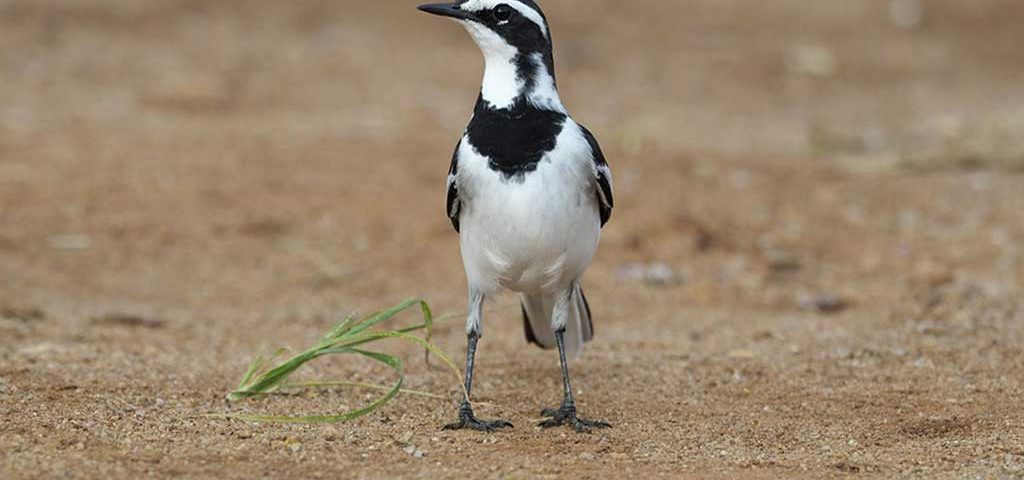

African Pied Wagtail Birding in Uganda
African Pied Wagtail Birding in Uganda is an enjoyable part of exploring the country’s birdlife because this striking black-and-white species can be seen around wetlands, rivers, gardens, roadsides, safari lodges and other open areas. Unlike some birds that require specialised forest walks or remote birding expeditions, the African Pied Wagtail often appears close to places where travellers are already staying or passing through.
Scientifically known as Motacilla aguimp, the African Pied Wagtail belongs to the wagtail and pipit family, Motacillidae. The species is recognised in the official Uganda Wildlife Authority Wildlife Directory, where it appears among Uganda’s recorded birds. Its bold black-and-white plumage, long tail and energetic feeding behaviour make it an excellent species for beginner birdwatchers to learn.
For travellers exploring Uganda with Wagatil Safaris, this bird can become surprisingly familiar. You may see one moving across a lodge lawn before breakfast, feeding beside a river, calling from a rooftop or walking rapidly beside a roadside stop. These everyday encounters show why birdwatching in Uganda is not limited to rare species or specialist tours.
What Is the African Pied Wagtail?
The African Pied Wagtail is a medium-sized bird found across parts of sub-Saharan Africa and is especially associated with open areas and freshwater environments. Its scientific name, Motacilla aguimp, places it among the true wagtails, a group known for their long tails and characteristic tail movement.
The species has a strong black-and-white appearance, with dark upperparts, contrasting white areas on the face and underparts, and white markings on the wings. The long tail is usually dark with paler outer feathers, creating a distinctive shape when the bird is walking or flying.
The Uganda Wildlife Authority Wildlife Directory includes the African Pied Wagtail among Uganda’s bird species, making UWA one of the strongest official external references for this article.
Why Is It Called a Wagtail?
The name “wagtail” comes from the bird’s repeated tail movement. When the African Pied Wagtail walks across open ground, its long tail frequently moves up and down, creating the energetic appearance associated with wagtails throughout the world.
This movement is one of the easiest identification clues for beginner birdwatchers. Even before the black-and-white markings become clear, the combination of rapid walking and constant tail movement often suggests that the bird belongs to the wagtail family.
The behaviour also makes the species enjoyable to observe because it rarely appears completely still. A single bird may walk, pause, flick its tail, chase an insect and move several metres within a short period.
How Do You Identify an African Pied Wagtail?
Adult African Pied Wagtails are recognised mainly by their bold black-and-white plumage. They typically show dark upperparts and head markings, white underparts and noticeable white facial and wing markings. This strong contrast helps separate them from many other small birds encountered around Ugandan lodges and wetlands.
The tail provides another useful clue. It is long, frequently moved and often displays pale outer feathers when the bird changes direction or takes flight.
Juvenile birds may appear greyer or browner than adults, so behaviour becomes especially useful when plumage is less obvious. Watching the bird walk rapidly across open ground while repeatedly moving its tail can often confirm the identification.
Where Can You See African Pied Wagtails in Uganda?
One of the main advantages of this species is that travellers do not need to visit one specific national park to find it. African Pied Wagtails can occur around rivers, lakes, wetlands, farmland, gardens, towns and open areas associated with human activity.
Official Uganda Wildlife Authority management documents also record the African Pied Wagtail in protected areas including Mount Elgon National Park and Toro-Semliki Wildlife Reserve. The species is included in the bird checklist for Mount Elgon and appears in UWA records for Toro-Semliki.
This wide distribution means visitors may see the bird during ordinary safari travel, especially around water, open ground and accommodation properties.
African Pied Wagtails Around Safari Lodges
Safari lodges can be excellent places to observe African Pied Wagtails because the birds often use lawns, paths, drainage channels, rooftops and gardens. These areas can attract insects while also providing open ground where the birds can feed efficiently.
Travellers who wake early before a game drive may notice a wagtail walking near the restaurant, reception area or parking area. Because the species is often comfortable around people, it can sometimes be observed without binoculars.
This makes the African Pied Wagtail particularly useful for beginner birdwatchers. Guests can study the bird’s markings, movement and feeding behaviour at close range before trying to identify more difficult species later in the safari.
Why Uganda Is Excellent for Birdwatching
Uganda is one of Africa’s important birding destinations because its relatively compact area contains forests, wetlands, savannahs, lakes, rivers, mountains and agricultural landscapes. These different habitats support a very large number of resident and migratory bird species.
The official Uganda Wildlife Authority birding guide explains that Uganda offers good birdwatching throughout the year and highlights destinations such as Bwindi, Mgahinga, Murchison Falls and Semuliki as major birding areas.
UWA’s 2026 State of Wildlife Resources reporting also notes that Uganda supports more than 1,000 bird species, reinforcing the country’s importance as a birdwatching destination.
Travellers can therefore combine general wildlife safaris with serious birding without needing to choose one type of experience exclusively.
African Pied Wagtail Around Queen Elizabeth National Park
Queen Elizabeth National Park is particularly rewarding for birdwatchers because it combines savannah, wetlands, lakes, channels, woodland and open grassland. This variety of habitats creates opportunities to observe both large waterbirds and smaller open-country species.
Travellers joining Wagatil’s Kazinga Channel boat safari often concentrate on hippos, crocodiles, elephants and large waterbirds, but smaller birds along the shoreline can be equally interesting.
African Pied Wagtails may use exposed banks and open areas close to water, making them possible sightings around the wider Queen Elizabeth landscape.
African Pied Wagtail Around Lake Mburo
Lake Mburo National Park combines lakes, wetlands, grassland, woodland and rocky areas, creating useful habitat for a wide variety of bird species. The park is especially appealing to travellers who want to combine general wildlife viewing with relaxed birdwatching.
Wagatil’s Lake Mburo National Park guide explains the activities available in the park, including game drives, walking experiences and wildlife viewing.
Birdwatchers should pay attention around lodge lawns, wetland edges, roads and open areas near water because these are the types of habitats where an African Pied Wagtail may appear.
African Pied Wagtail Around Kibale
Kibale is internationally known for chimpanzee tracking, but the wider landscape around the forest also supports excellent birding. Forest, farmland, community land, gardens and wetland areas occur close together, creating opportunities to see both forest specialists and adaptable open-country species.
Travellers visiting Kibale should therefore continue watching for birds even outside the forest. Lodge gardens, roadsides and village areas can be surprisingly productive.
Wagatil’s Kibale National Park Chimpanzee Guide introduces the wider destination and helps travellers understand how chimpanzee tracking fits into a broader Uganda safari.

An African Pied Wagtail standing in an open area in Kibale, Uganda
African Pied Wagtail Around Bigodi Wetland
Bigodi Wetland is another useful destination for travellers interested in birds because it combines wetlands, community landscapes, cultivated areas and open spaces close to Kibale.
Wagatil’s Bigodi Wetland Community Walk explains how the area complements chimpanzee tracking with birding, primate observation and community experiences.
The African Pied Wagtail is a good example of why travellers should pay attention to common birds as well as famous species. A bird seen near a village path or wetland edge can still provide excellent photography and behavioural observation.
Why Does the African Pied Wagtail Like Water?
African Pied Wagtails are strongly associated with freshwater environments such as rivers, streams, wetlands, lake margins and other areas where open ground occurs close to water.
These habitats provide productive feeding opportunities because insects often gather around mud, stones, shallow water, vegetation and exposed banks.
Uganda’s extensive network of lakes, rivers and wetlands therefore provides ideal conditions for this species. Travellers exploring the Nile, Lake Victoria region, Kazinga Channel, Lake Mburo and numerous smaller wetlands should pay attention to exposed shoreline areas.
What Does the African Pied Wagtail Eat?
The African Pied Wagtail feeds mainly on insects and other small invertebrates. It often searches for prey by walking quickly across open ground, stopping suddenly and pecking at insects on soil, grass or stones.
Its diet may include flies, beetles, ants, grasshoppers, caterpillars and other small prey. The bird may also capture insects close to water or make short flights when chasing moving prey.
This feeding behaviour explains why short grass, open ground and riverbanks are particularly attractive. These environments allow the bird to see and pursue insects more easily than dense vegetation would.
Why Are They Often Seen on Lawns?
Short grass can provide excellent feeding conditions because insects are easier for wagtails to detect and catch. Safari lodge gardens, hotel lawns and maintained open spaces can therefore become productive feeding areas.
This is one reason the species often appears comfortable around human settlements. Buildings and gardens do not necessarily remove all suitable habitat; in some situations, they create new open feeding areas.
Travellers should therefore keep watching around accommodation properties instead of assuming birding begins only after entering a national park.
Why Does the African Pied Wagtail Live Near People?
African Pied Wagtails are highly adaptable birds. They can use natural habitats such as riverbanks while also taking advantage of lawns, rooftops, gardens, cultivated fields and open areas around buildings.
The availability of insects, water and suitable nesting locations can make human-modified environments surprisingly useful.
This adaptability is one reason visitors may notice the species repeatedly during a Uganda safari. A bird first seen near a lodge may appear again beside a restaurant, roadside stop or wetland several days later.
Does the African Pied Wagtail Eat Human Food?
African Pied Wagtails may occasionally investigate food scraps around buildings or settlements, but travellers should avoid deliberately feeding them.
Wild birds are best observed when they continue using natural food sources. Feeding can change behaviour, encourage dependence and attract birds to areas where they face unnecessary risks.
Instead of offering food, travellers should watch how the bird naturally hunts insects. This provides a much more interesting understanding of its feeding strategy and behaviour.
Where Does the African Pied Wagtail Nest?
African Pied Wagtails build cup-shaped nests using plant material such as grass and fibres. Nest sites can occur in protected cavities, banks, rocky areas and structures associated with human settlements.
Their ability to use sheltered locations around buildings is another reason the species succeeds near people.
Travellers who notice adults repeatedly entering one location should keep their distance because nesting birds can become disturbed by repeated approaches.
What Do Young African Pied Wagtails Look Like?
Juvenile African Pied Wagtails are usually less strongly patterned than adults and may appear greyer or browner. This can make them more difficult to identify for visitors expecting the very sharp black-and-white contrast shown in adult birds.
Watching young birds beside adults can make identification much easier. Body shape, long tail and characteristic movement still provide useful clues.
Family groups can also offer interesting behaviour because juveniles may beg for food or practise catching insects independently.
Is the African Pied Wagtail Rare?
The African Pied Wagtail is not generally regarded as a rare bird. It is widespread across suitable habitats in sub-Saharan Africa and can be locally common where freshwater and open feeding areas are available.
BirdLife Africa documentation also records Motacilla aguimp among African wetland and water-associated bird communities.
Its relative abundance should not make it less interesting. Common birds often provide the best opportunity to study plumage, behaviour and habitat preference carefully.
African Pied Wagtail Compared With Other Wagtails
Uganda supports several wagtail species, so birdwatchers should not identify every long-tailed bird as an African Pied Wagtail.
The African Pied Wagtail is particularly distinctive because of its bold black-and-white coloration and its ability to live around open ground and human settlements.
Other species, such as the Mountain Wagtail, may show greyer plumage and stronger associations with fast-flowing streams and forested mountain habitats.
Comparing habitat, plumage and behaviour together usually provides a more reliable identification than relying on one feature alone.
African Pied Wagtail and Mountain Wagtail
The Mountain Wagtail is one of the most useful comparison species because both birds can occur near water.
Mountain Wagtails are typically associated more strongly with rocky streams and flowing water in forested or highland environments, while African Pied Wagtails are generally more comfortable around open ground, gardens, settlements and broad freshwater areas.
Learning this difference can be particularly helpful for birdwatchers travelling through Kibale, Bwindi, Mount Elgon and other highland regions.

An African Pied Wagtail perched near water in Queen Elizabeth National Park.
How to Photograph an African Pied Wagtail
African Pied Wagtails make excellent photography subjects because they often feed in open areas. However, their constant movement can make them surprisingly difficult to photograph sharply.
A relatively fast shutter speed can help capture walking, feeding and tail movement. Photographers should also avoid chasing the bird across a lawn because waiting quietly often produces better opportunities.
Early morning and late afternoon light can be particularly useful because the softer light helps preserve detail in both the dark and white feathers.
Photographing Black-and-White Birds
Black-and-white plumage creates a specific challenge for photographers. If exposure is too bright, the white feathers can lose detail, while overly dark exposure can make black plumage appear flat.
Photographers should monitor highlights carefully and, where possible, photograph in RAW format so that exposure can be adjusted later.
The African Pied Wagtail is an excellent bird for practising this technique because travellers may encounter it repeatedly during the safari.
Best Time of Day to Look for African Pied Wagtails
African Pied Wagtails can be active throughout much of the day, but early morning often provides particularly enjoyable birdwatching conditions.
Cooler temperatures, softer light and active insects can make lodge gardens, wetland edges and riverbanks productive places to observe the species.
Late afternoon can also be rewarding, especially around accommodation properties where travellers have time to walk through safe designated areas before dinner.
Can You See African Pied Wagtails During an Ordinary Safari?
Yes. A dedicated birding itinerary is not necessary to encounter this species.
Wagatil’s Uganda Wildlife Safaris naturally pass through wetlands, rivers, lodge grounds, savannahs and community areas where many bird species can be observed.
Travellers who keep binoculars nearby and pay attention between major activities often discover far more birds than they expected.
Should You Bring Binoculars?
Binoculars are highly recommended even for travellers whose main interests are gorillas or large mammals.
African Pied Wagtails may sometimes approach closely, but binoculars allow visitors to study facial markings, wing patterns and feeding behaviour without moving toward the bird.
Compact binoculars are usually enough for casual safari travellers, while dedicated birdwatchers may prefer larger models with stronger low-light performance.
Birdwatching Etiquette Around African Pied Wagtails
Responsible birdwatching means allowing birds to behave naturally. Do not repeatedly chase a wagtail for photographs, approach an active nest or feed the bird simply to bring it closer.
If the bird continually moves away, increase the distance and wait quietly.
Playback of recorded bird calls should also be used carefully because repeated playback can disrupt territorial or breeding behaviour.
Uganda’s Bird Conservation Importance
Uganda’s national bird resources are part of a much wider conservation picture. The Uganda Wildlife Authority manages protected areas across the country and continues to monitor wildlife diversity and habitat conditions.
UWA’s 2026 State of Wildlife Resources report notes that Uganda supports more than 1,000 bird species and highlights the importance of habitat protection, ecological monitoring and conservation management.
Travellers who participate in responsible birdwatching therefore contribute indirectly to a tourism system that gives economic value to wildlife and protected habitats.
African Pied Wagtail Birding in Uganda: Final Thoughts
African Pied Wagtail Birding in Uganda is a reminder that memorable birdwatching does not always require finding the rarest species. The African Pied Wagtail is attractive, energetic, adaptable and relatively easy to observe, making it one of the best birds for travellers beginning to learn Uganda’s birdlife.
From lodge lawns and riversides to wetlands, national parks and rural settlements, this species can appear in many different settings. Official Uganda Wildlife Authority birding information confirms Uganda’s importance as a year-round birdwatching destination, while the UWA Wildlife Directory specifically includes the African Pied Wagtail among Uganda’s recorded species.
Travellers exploring Uganda with Wagatil Safaris can combine birdwatching naturally with gorilla trekking, chimpanzee tracking, game drives, boat safaris and community experiences. Keeping binoculars nearby and watching the smaller wildlife around each destination can transform an ordinary safari into a much richer natural-history experience.